As we learn more about sustainable agriculture and the dangers of genetically modified foods from revealing documentaries like Food, Inc., we are increasingly concerned about where the food we eat comes from.
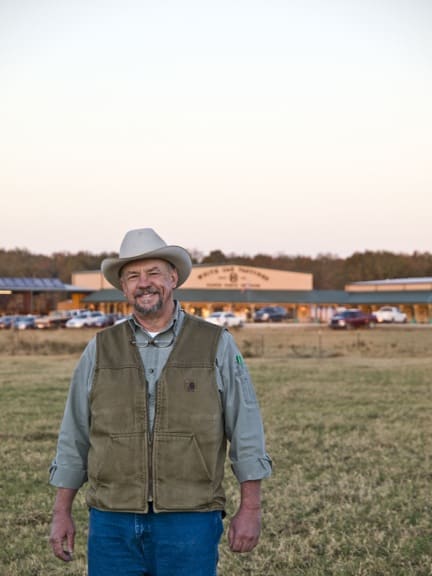
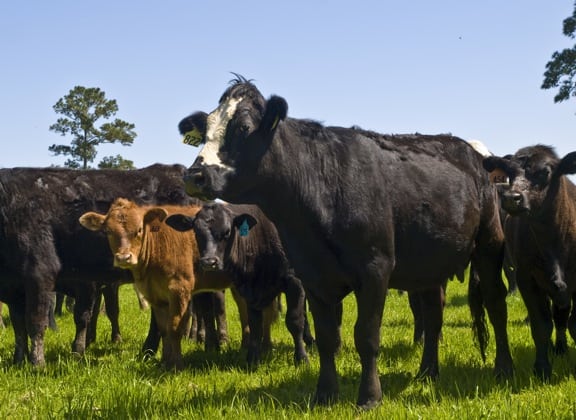
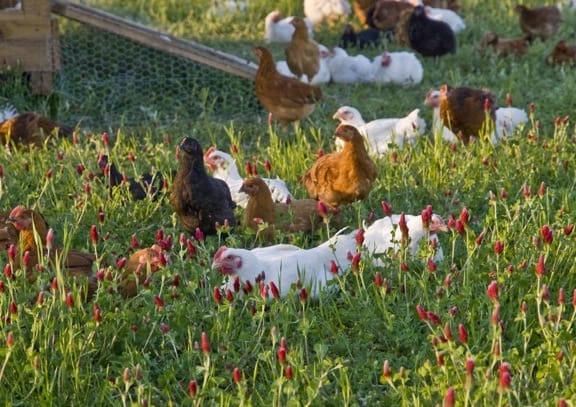
Our burgeoning curiosity about the locavore movement led us to discover White Oak Pastures, a farm located in our home state of Georgia that focuses on sustainable land stewardship, animal welfare and eco-friendly farming practices. Located in Bluffton, GA, the farm has been in the Harris family since 1866, focusing primarily on grass-fed beef and lamb and free-range poultry. Their motto?
“We take care of the land and the herd, and they take care of us.”
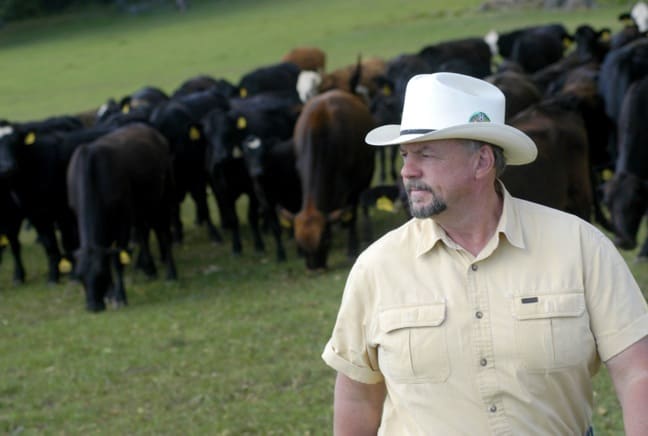
Earlier this month at the Take Pride In America celebration in Washington, DC, fourth generation cattleman (and WOP President) Will Harris received an American Treasures award for setting national standards in sustainable farming. Under Harris’ watch, the company has become the largest certified organic farm in Georgia; one of only two on-farm, USDA-inspected, grass-fed beef plants in the country; home to the largest solar barn in the Southeast; received a Step 5 rating from the Global Animal Partnership, (their processing plant is also Animal Welfare approved); and made their processing plants zero waste operations, with blood turned into liquid organic fertilizer, bones ground into bone meal, and all eviscerate composted to use as soil amendments for the farm’s certified organic pastures.
We recently spoke with Harris about the ongoing changes in the farming industry, the importance of sustainable agriculture and the future he hopes to see.
You grew up on the farm, and farming had obviously been your family’s focus for many generations. As a teen, was there ever any question in your mind that you’d be a farmer when you grew up?
No, I never wanted to do anything except run this farm. It’s a good thing, too. I’m an only child. A dinner table announcement that I was going to move to New York to pursue a career in theater would have been very poorly received.
How would you say the farming industry on the whole has changed most since you were a kid?
During the 1960′s, I witnessed the last stages of the industrialization of agriculture that began at the end of WWII. During the 1970s, ’80s and ’90s I witnessed the heyday of industrial agriculture. Now I have seen the realization, by consumers, of the unintended consequences of this industrialization.
A lot of people don’t even want to eat meat these days because of all the hormones used and the mistreatment of animals that seems prevalent in the modern-day meat business. Can you talk about your feeling regarding companies that try to cut corners in order to maximize profits?
I insist on knowing where the meat that I eat comes from. I know too much about meat production.
I know you made major changes to White Oak Pastures when you took over from your father as President. Can you talk about some of those changes and why they were important to you?
When my father industrialized our farm, it was to take costs of the production of our meat. There were unintended consequences to these intentional changes. We did not intend to oxidize the organic matter in our soil by using synthetic fertilizers and pesticides. We did not intend to lower our animal welfare standards for our herds. But we did. It took a long time to recognize these damages to our land and herds. Disgust followed recognition. We are now on an improving program of intentionally emulating nature and natural systems.
Other than the obvious ethical benefits of animals that have been raised eating natural grass, can you explain a bit about why it makes the meat taste better?
I’m convinced that there are benefits to slaughtering animals that are in the physical condition that they would be if they were in a natural environment, and not unnaturally obese. I’m also convinced that there are benefits to raising animals in a welfare program in which are not ever frightened to the point of flight or fight.
You guys have the largest solar barn in the Southeastern U.S., and run a zero waste operation. How difficult was that to implement, and what have been the long-term benefits of it?
Not so difficult, just expensive. Doing the right things costs more money. You just have to believe that if you do the right things, you will be rewarded at some level.
A lot of our readers are animal advocates, and I know you feel strongly about treating your animals with respect. What does White Oak Pastures do to treat animals differently than your average cattle farm?
Our animals never know that people can or will hurt them. They only know that people feed, water, and comfort them. This is up to, and including, the slaughter process.
On July 4 you received the 2012 American Treasures Award from MADE: In America. What does that recognition mean to you personally?
For us, the award is a validation that we are doing the right things. High animal welfare and good environmental stewardship are our core values, and we have been honored [and humbled] to have been chosen to receive a number of awards recognizing this. We feel enormous gratitude for having been given this opportunity to do good work, and the strength to do it. Sustainable farming is important because we only have this one planet.
Do you see any trends suggesting that more farmers and ranchers are starting to follow your lead in sustainable farming?
Sadly, very little. When we began this journey I believed that I was helping to change the way that America was producing food. I now know that I only serve a small number of customers who care about the humane treatment of animals and good land stewardship. This is a nation of big box discount store shoppers. Our niche is growing, but it will always be a small percentage of the overall market.
Where do you hope to see this industry 10 years from now?
Honestly, I would just like for our local, humane, artisanal, sustainable food production system to grow to be as large as it can be. –Bret Love
If you enjoyed reading our interview with Will Harris on Sustainable Agriculture, you might also like:
So so so interesting! We are vegetarians and won’t eat grass-fed meat either way, but I am so happy you’re reaching out to your readers with really informative posts like this one! When we did our big NYC to NOLA road trip last year it was my intention to locate local, organic farms and buy only food from them as we traveled through the South. What happened instead was hunting for semi-edible food on Interstate rest stops. One time the healthiest food we found was baked beans and coleslaw from a KFC knock-off. Had there just been one cart filled with fresh veg outside, we’d have nibbled on carrots and strawberries all the way to our next destination. Anyway – fascinating post!
Jess | GlobetrotterGirls recently posted..1,000 PLACES TO SEE BEFORE YOU DIE – book review and giveaway!
Thanks, Jess! It’s definitely, as Will said, a small sector of the market, but our hope is that as people get more and more informed about the benefits of organic, sustainable foods, more farmers will adopt White Oak Pastures’ practices and eventually prices will drop, making it more affordable for average Americans. In the meantime, it seems more and more people are trying to grow their own veggies, and even in the suburbs of Atlanta you can find people raising their own chickens.
It slightly worries me that there are only two farms like this in the US. Are people that unwilling to pay the little extra for their meat to make the world a better place? Sigh.
Laurence recently posted..A day trip from Barcelona: Girona and Figueres
I don’t know if it’s unwilling so much as unable. The American economy is still really difficult, with a lot of households (including ours) forced to survive on one income. The cost difference between organic and non-organic meat (or veggies, for that matter) is still substantial, and a lot of families simply can’t afford it. Would love to see more federal subsidies for organic, sustainable farms and other clean energy businesses.
Bret,
I’m a bit disappointed that you didn’t ask your subject about the differences in environmental impact of the kind of farming he does versus a large production farm, feedlots, etc. This is an environmentally oriented website, and I would have liked to read that discussion. Loss of land and trees, methane and CO2 gas increases, runoff, waste disposal are all issues associated with meat production.
Besides the issues in your interview and the environmental ones, I have also gone almost completely vegetarian because of the cancer risks of consuming dairy and meat. The only information I have on this subject is that the cancer risks are no different from factory farmed meat or family farmed meat. But I don’t know how valid the source is.
Sorry to disappoint. It would’ve been great to talk to him about that, but I honestly just didn’t think of it at the time, as we conducted the interview right before we left for our New York trip. Too much work and not enough play makes Bret a brain-frazzled boy…
This was a great post. As a vegetarian, I love reading about humane/environmentally conscious farms like this one. I’m realistic enough to know the whole world isn’t going to give up eating meat any time soon, so it’s great to see a farmer who is motivated to make positive changes in the meat industry.
Thanks, Marina. I’m glad that you, as a vegetarian, can understand the value in a farm like White Oak Pastures. For us, any positive change is a step in the right direction.
It’s great that these sorts of operations are changing now for the better. More education and understanding about where our food comes from is what is needed!
Solar barn! Love it–and his whole approach to food production. I grew up in the central valley of California (aka, mega-farm central) and my dad sold John Deere farm equipment. Ever since then I’ve loved farmers. It helps that I like to eat, too…Another innovative approach to food production: Belcampo Meat Co. in California http://www.belcampomeatco.com/ That said, I just finished a hamburger here in Nicaragua. Lord know what was in it or where it came from…
Karen @ Trans-Americas Journey recently posted..100 Years of the Calgary Stampede – Calgary, Canada
Yeah, I really liked what Harris said about making sure the animals never knew or felt any fear of or threat from humans, up to the very end of their lives. Just seems like the smart, humanet way to do things.
It’s great to hear these kind of stories but I fear that the bottom line will always win out. Not enough consumers care about the environment (or even their own health) compared to cost. Something that’s cheaper will often be the one that’s chosen at the supermarket, rather than the one that’s better. I think it will take a mass re-education of the population before something like this becomes the norm.
Turtle recently posted..The world’s symbol for liberty
I agree: Most people are never going to be able to afford organic fruits and veggies or grass-fed, sustainable meats. Even we can’t afford to eat it all the time. But we feel an obligation to be a part of that re-education you mentioned, so that people can at least make informed decisions about what they choose to put into their bodies.
Pingback: CeeLo Green Launches GreenHouse FoundationGreen Global Travel
Pingback: Chuck Leavell- Interview with Mother Nature Network Co-FounderGreen Global Travel
Pingback: ECO NEWS: Coho Salmon vs. VineyardsGreen Global Travel
Pingback: DIY Aquaponics -The Future of Green GardeningGreen Global Travel
Pingback: Top 5 Eco-Friendly Tourist Attractions in New MexicoGreen Global Travel
Pingback: DIY Aquaponics -The Future of Green GardeningGreen Global Travel
Pingback: ECO NEWS: The Monsanto Protection Act & the Uproar Around GMO FoodsGreen Global Travel