Co-Founded by Bret Love & Mary Gabbett, Green Global Travel is an ecotourism, nature / wildlife conservation & cultural preservation magazine. More about us.
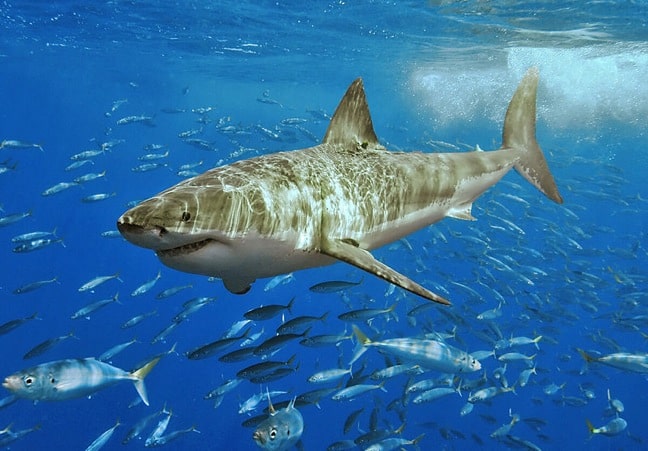
Though the Great White Shark is far more ferocious on the Jaws DVD than it is in reality, that hasn’t stopped the Western Australia Government from announcing a new “shark migration plan,” which will pay local fishery departments to track, capture and, in the most serious instances, kill the fish if beachgoers’ lives are at risk.
The reason for the change in thought after 10 years of unrelenting protection of the world’s largest predatory fish? A sharp spike in attacks along the Australian coast over the past year. In the past year alone, there have been five Great White Shark attacks. Conversely, there were just 12 over the last century. Just this past July, in fact, a surfer was killed by a Great White Shark near Wedge Island, which sits about 100 miles north of Perth.
“We will always put the lives and safety of beachgoers ahead of the shark,” Western Australia state premier Colin Barnett told ABC radio in late September. “This is, after all, a fish. Let’s keep it in perspective.”
Groups like the Conservation Council of Western Australia initially praised the premier’s tuna-baited hooks and other non-lethal approaches to attack prevention. But once Barnett announced the new kill policy, the Council began creating ripples. “We are concerned that plans to kill sharks that approach beaches applies a ‘guilty until proven innocent’ approach to sharks,” the council’s Marine Coordinator Tim Nicol said in a statement.
Green Global Travel is also concerned. While we support efforts such as GPS tracking programs and the purchase of more rescue jet skis, taking the kill-them-before-they-kill-us approach not only sends a knee-jerk message throughout the world, but its effects could present long-lasting ecological damage along Australia’s coast. –DeMarco Williams

“This is, after all, a fish. Let’s keep it in perspective.”
Yikes. Not good at all…
- Maria Alexandra
nomadic translator recently posted..European Halloween traditions and festivals
Agreed. That statement really rubbed me the wrong way, showing an ignorance of the shark’s importance in the Australian marine ecosystem. Without sharks, the whole food chain gets out of whack.
Just to put another perspective on this.
A few years ago our South Western corner was flooded with crayfish (lobster) fishermen, the numbers exploded from 2 or 3 boats, to at the peak somewhere around 45 boats, each boat having about 100 craypots in the water every day.
So lets think about this for a minute, 45 boats x 100 pots x about 3 kilos of bait (oily mackerel or hoki),
that is 13,500 kg of bait in the water every day.
Craypots where being set all along our Cape to Cape coast and right in close on major local surf breaks.
Now is 13.5 tonnes of bait a day for months on end doesn’t attract great white sharks that have been following the migrating whales then I don’t know what will attract them.
Follow this up with the stupidity of our Department of conservation burying washed up whales on our beaches (Cottesloe Beach, Forrest Beach, Smiths Beach and left a rotting whale on the rocks all last year between Smiths and Yallingup Beach) .
All this rotting whale seeping into to the ocean along our coast and now we point the finger at the sharks?????
Something to think about!
Wow, what great insight, Brady! Thanks very much for sharing that info. It does explain why the sharks have been more and more active on Australia’s Western coast. But I’m curious, why on earth did they bury rotting whale carcasses on the beaches? I’m trying to imagine a reality in which that makes any kind of sense…
I’m not sure it makes any kind of sense at all. When we go fishing we use burly to attract and excite the fish into a feeding frenzy, yet the powers to be see fit to bury decaying whales on our beaches and think nothing of it.
The locals in the Smiths Beach area are up in arms, there have been a number of articles in our local paper recently.
I’m at a loss to understand the reasoning behind it all.
I appreciate that shark attacks are very rare, but it would be foolish to ignore the risk. It was a great trip if you like to rough it. if you a five star resort diver the accomodation may not meet your expectations.
