Since day one, the mission of Green Global Travel has been to learn how to live and travel more responsibly and sustainably, and then to share that knowledge with our readers.
As our site has grown over the past 8 years, so have we, shaped by an ever-growing understanding of how the environment works and our human role as its stewards. As the environment has evolved, with climate change and pollution and species loss accelerating at an increasingly rapid pace, so has the science and technology used to try to deal with those sweeping changes.
When we first starting writing about GMO crops in 2012, Monsanto– which we called “the bully of American agriculture”– had just had a federal class-action lawsuit against it dismissed. The controversy over plant biotechnology and genetically modified organisms that had begun with the 2008 documentary Food Inc. was just starting to become mainstream.
A lot has changed in the last 10 years. Arid weather conditions, drought, pesticide-resistant bugs, and a surging global population have led to burgeoning food crises that promise to get much worse over time. Devastating famines are affecting more than 20 million people in developing nations such as Nigeria, Somalia, South Sudan, and Yemen.
Meanwhile, here in the US, the controversy over GMO foods rages on. The International Agency for Research on Cancer, part of the World Health Organization, classified glyphosate (a key ingredient in Roundup) as “probably carcinogenic in humans.” Monsanto lost its lawsuit to stop California from listing glysophate as “known to the State of California to cause cancer,” which it did in 2017.
While around half of the EU member countries have banned GMOs completely, the World Health Organization, United Nations Food & Agriculture Organization, and American Medical Association have all insisted that GMOs are actually safe.
So when the International Service for the Acquisition of Agri-biotech Applications (ISAAA) sent us its latest report, stating that, “Biotech crops offer enormous benefits to the environment [and the] health of humans and animals,” we decided to investigate.
Here, with minimal editing, is our interview with ISAAA Chairman Dr. Paul S. Teng.
- Background on Dr. Paul S. Teng
- What is Plant Biotechnology?
- Positive Aspects of Biotech
- Criticisms of GMOs
- Biotechnology Ethics
- GMOs in the USA
- Regulating GMO Crops
- Biotech vs. Climate Change
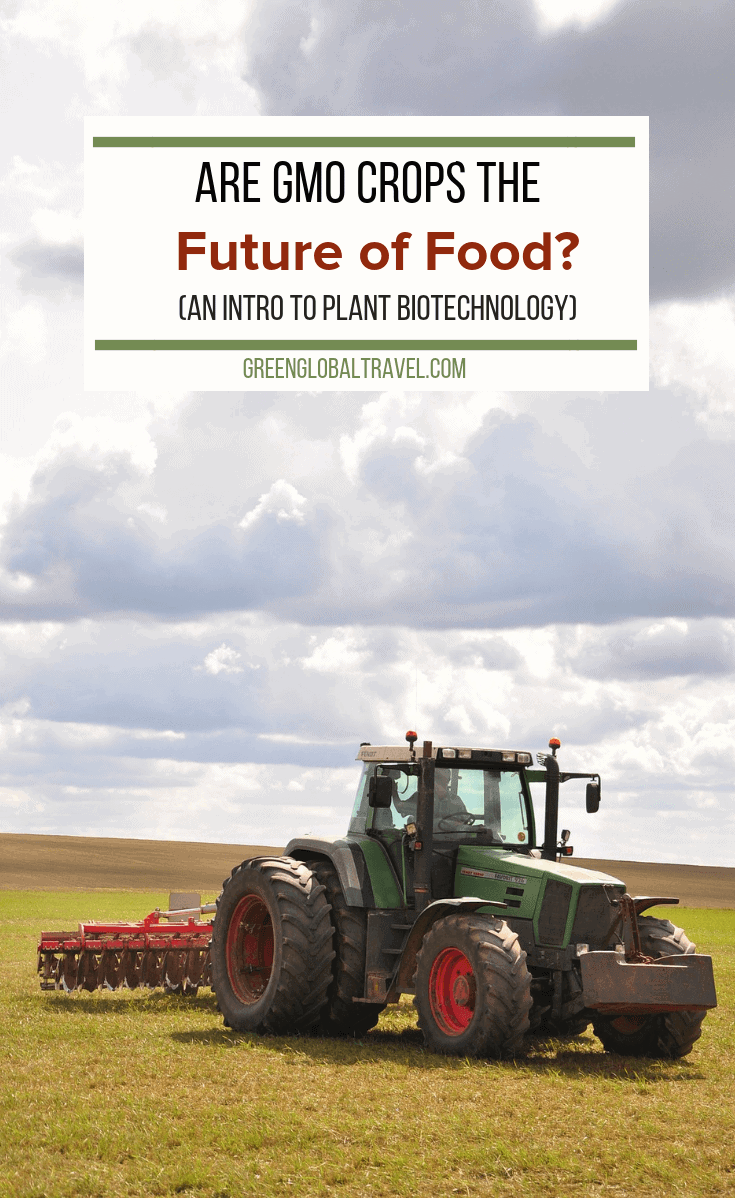
BACKGROUND ON DR. PAUL S. TENG
What originally drew you to the field of plant biotechnology?
I’ve always been interested in how science and research could help address issues related to crop loss and food insecurity. Especially here in Asia, but really on a global scale.
I received my PhD in Agricultural Microbiology/Systems Research from the Lincoln College at the University of Canterbury in New Zealand. Since then I’ve dedicated my career to using systems analysis and modelling techniques to try and predict biological phenomena and propose solutions where needed.
If you trace advancements in agriculture back to Dr. Norman Borlaug (who won the Nobel Peace Prize in 1970 for increasing food supply) and the “green revolution,” you’ll see how critical a role research and science plays in agriculture and growing food. Experts all over the globe are constantly looking at ways to better use the limited resources we have available to us.
Whether that is through smarter breeding, biotechnology, understanding the benefits of microbes in the soil, or using data and modeling to better predict crop patterns, we have to continuously get better and smarter about how we look at agriculture.
READ MORE: What Is Permaculture Gardening? (Intro to Design & Principles)

Can you tell our readers a bit about your background in agricultural biotechnology?
I am currently the Chair of the Board of Directors of the International Service for the Acquisition of Agri-biotech Applications (ISAAA).
This is a not-for-profit international organization that shares the benefits of crop biotechnology to various stakeholders, particularly resource-poor farmers in developing countries, through knowledge-sharing initiatives and the transfer and delivery of proprietary biotechnology applications.
I specialize in epidemiology, agricultural/food systems research, science communication, and development management. I’m proud of the work I’ve done throughout my career in the academic, research, and non-profit sectors. I’ve been a regular consultant for the United Nations Food & Agriculture Organization (FAO), World Bank, and other international and regional organizations.
I’ve extensively researched the role of plant diseases in causing epidemics and crop losses in several continents, working cooperatively with a network of national program scientists. This work has led to over 250 journal papers, eight books, numerous conference papers, and recognition by peer organizations. Much of the work I’ve done throughout my career in research and modeling is still having an impact today, both in the U.S. and Asian rice-growing countries.
I’ve been honored to receive several awards throughout my career, including the Eriksson Prize in Plant Pathology from the Royal Swedish Academy of Science and an Honorary Doctor of Science from Murdoch University in Australia. I was named a Fellow of the American Phytopathological Society, the International Society of Plant Pathology, and the World Academy of Sciences.
READ MORE: Permaculture Design Principles (12 Steps to a Better Garden)
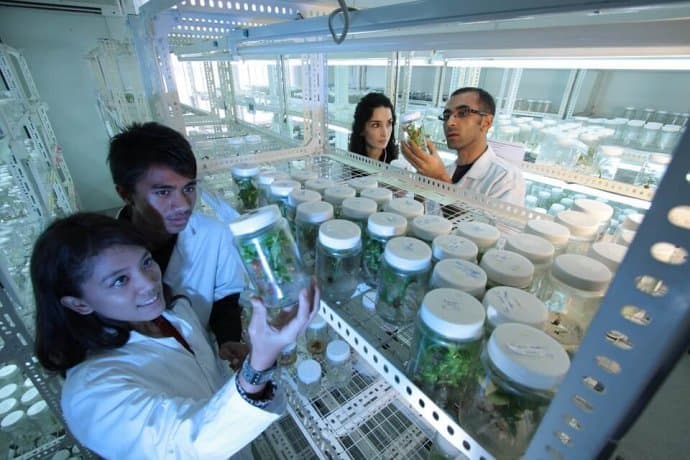
WHAT IS PLANT BIOTECHNOLOGY?
For our readers who aren’t familiar with the field, can you tell us in layman’s terms what plant biotechnology is and why it’s important for us to talk about it?
Agricultural biotechnology allows plant breeders to take a desirable trait found in nature, such as disease resistance, and transfer it from one plant to the plant they want to improve. Or they can make a change to an existing trait in a plant they’re developing.
Genetic engineering differs from other plant-breeding techniques by enabling specific, predictable changes to be made to the plant.
For more than 10,000 years humans have selectively cultivated plants to create new varieties of crops with desirable traits, such as being resistant to pests or diseases, or being tolerant to herbicides that allow farmers to better control weeds. It is a continuing battle to keep ahead of pests and diseases so that severe crop losses may be averted.
I think biotechnology is a critical tool for farmers and our broader population in the fight against food insecurity. But for your readers, I think there are lesser-known benefits as it relates to climate change and the environment. The adoption of biotechnology in many regions actually can lead to improved soil health and water retention, and decreased greenhouse gas emissions.
READ MORE: What is Aquaponics? The Future of Green Gardening
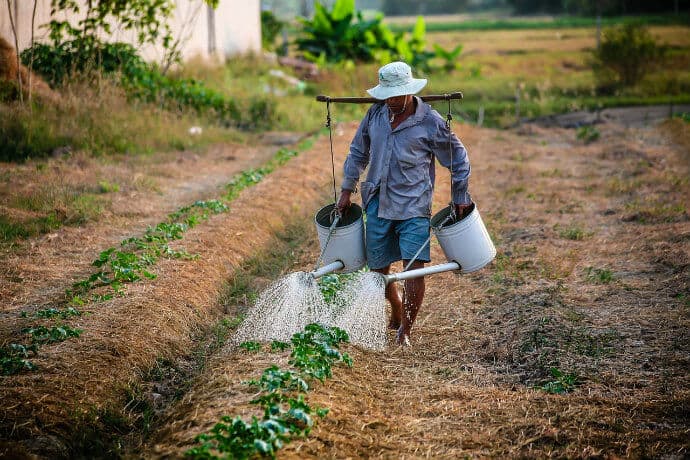
The ISAAA released a study that showed the global biotech crop area increased in 2017 by 4.7 million hectares, with much of that growth coming in developing nations. Why and how is biotech agriculture seen as a solution for the impending global food crisis?
Global food insecurity is still a leading problem in the developing world. According to the Global Report on Food Crises in 2017, around 108 million people in 48 food crisis-affected countries are still at risk, or in severe acute food insecurity. This is despite massive and collective efforts of international organizations to address food challenges.
About 60% of the hungry people are located in 19 countries that are facing conflict and climate change crisis situations. High risks of famine were recorded in northeast Nigeria, Somalia, South Sudan, and Yemen, where 20 million people were severely experiencing hunger.
Food experts for a long time believed that food production must increase by 70% in order to feed the world’s growing population. I– and many other experts across the globe– see biotechnology as a part of the solution. We need to allow farmers, especially those in developing nations, to have access to technology that enables them to grow crops in difficult climates and conditions.
Advancements in agricultural technology can take many forms. These include smarter traditional breeding, focus on soil health, use of microbial technology, or the more traditional definition of biotechnology. But farmers should have the option to adopt technologies that can be incredibly beneficial to them and their communities.
READ MORE: GMO OMG (What the Hell Are They Putting In Our Food?!)
POSITIVE ASPECTS OF BIOTECH
ISAAA’s recent report stated, “Biotech crops offer enormous benefits to the environment [and the] health of humans and animals.” Can you explain how genetically modified crops improve the environment and health?
There are quite a few environmental and health benefits that can be derived from biotechnology. Here is a brief excerpt from our annual study that I think is most helpful:
Biotech crops are being adopted globally because of the enormous benefits to the environment, health of humans and animals, and contributions to the improvement of socio-economic conditions of farmers and the general public.
Global economic gains contributed by biotech crops in the last 21 years (1996-2016) have amounted to US$186.1 billion [in] economic benefits to more than 16 to 17 million farmers, 95% of whom come from developing countries.
Biotech crops contributed to food security, sustainability and climate change by:
• increasing crop productivity by 657.6 million tons valued at US$186.1 billion in 1996-2016; and 82.2 million tons valued at US$18.2 billion in 2016 alone;
• conserving biodiversity in 1996 to 2016 by saving 183 million hectares of land, and 22.5 million hectares of land in 2016 alone;
• providing a better environment by saving on 671 million kg of pesticides in 1996-2016, and by 48.5 million kg in 2016 alone from being released into the environment;
• by saving on pesticide use by 8.2% in 1996-2016, and by 8.1% in 2016 alone;
• by reducing EIQ (Environmental Impact Quotient) by 18.4% in 1996-2016, and by 18.3% in 2016 alone;
• reducing CO2 emissions in 2016 by 27.1 billion kg, equivalent to taking 16.7 million cars off the road for one year;
• helping alleviate poverty through uplifting the economic situation of 16-17 million small farmers and their families, totaling >65 million people, who are some of the poorest people in the world (Brookes and Barfoot, 2018, Forthcoming).
READ MORE: Is White Oak Pastures the Future of Sustainable Agriculture?
CRITICISMS OF GMOS
GMOs have many detractors. The Organic Consumers Association, Union of Concerned Scientists, and Greenpeace have all argued that the risks of GMOs have not been adequately identified, and questioned the objectivity of regulatory authorities. Do you think there’s merit to cautious skepticism about the food we eat, in light of the many regulatory failures that have plagued industrial societies?
I think food is a very personal topic. People across the globe should have a deep curiosity about how food is grown. So I understand why people have questions about GMOs or other aspects of agriculture with which they are not familiar.
But the caution and skepticism surrounding plant biotechnology sometimes disregards the length of time, discovery, testing, and significant regulatory approval that occurs before GMO crops are introduced to the food supply or shows up in a grocery store.
And the fact is, the overwhelming consensus of scientific experts and major scientific authorities around the world– including the World Health Organization, United Nations Food and Agriculture Organization, and American Medical Association– have all agreed that GMOs are safe.
READ MORE: Top Foods to Buy Organic (& When It’s Not Necessary)
BIOTECHNOLOGY ETHICS
Is there any such thing as “good” and “bad” GMO crops, or are all genetically modified organisms the same? Where is the line of ethics in terms of plant biotechnology?
Through the advancement of technology, scientists have been able to develop more precise and powerful tools to produce crops and animals with selected traits that aim to benefit farmers and consumers.
Similar to other emerging technologies, biotechnology has instigated worldwide debate and confusion. This is a result of mixed messages from various people, whether they be scientists, academics, critics, industry, religious representatives, or consumer bodies.
The worldwide debate on the pros and cons of biotechnology have been likened to a battleground. They’re a prominent place for virtually every ethical concern. It has stirred conflicting ideas and opinions and has polarized sectors, not only among stakeholders but even between countries.
The Food and Agriculture Organization of the United Nations recognizes that there is no single set of ethical principles sufficient for building a more equitable and ethical food and agricultural system.
However, it recommends the following actions that individuals, states, corporations and voluntary organizations in the international community can take:
• Creating the mechanisms to balance interests and resolve conflicts;
• Supporting and encouraging broad stakeholder participation in policies, programs, and projects;
• Encouraging individuals, communities, and nations to engage in dialogue, and ultimately, to do what is ethical;
• Developing and disseminating widely the information and analyses necessary to make wise and ethical decisions;
• Ensuring that decision-making procedures in international food and agriculture policy are well understood and transparent;
• Fostering the use of science and technology in support of a more just and equitable food and agriculture system;
• Ensuring that programs, policies, standards, and decisions always take ethical considerations into account so as to lead to enhanced well-being, environmental protection and improved health;
• Developing codes of ethical conduct where they do not currently exist;
• Periodically reviewing ethical commitments and determining whether or not they are appropriate, in the light of new knowledge and changes in circumstances.
READ MORE: The Monsanto Protection Act & the Uproar Around GMO Foods

So what does that all mean?
Despite the diversity of ethical issues in agricultural biotechnology, there is a need to understand beliefs and doctrines. This allows coexistence within and across societies, and prevents social conflict.
A technology’s acceptance is based not only on technological soundness, but on how it is perceived to be socially, politically, and economically feasible from the viewpoint of disparate groups.
An understanding of ethics helps determine what information is needed by society and how to deal with different opinions. A process of negotiation based on trust is essential to enable stakeholders to participate in debates and decision making.
READ MORE: Going Green (60 Simple Tips For Earth Day & Every Day)
GMOS IN THE USA
More than 35 countries have now banned GMO crops, including around half of the members of the European Union. What would you say to those who feel passionately that the USA should join that list?
One of the goals of our organization is to ensure that people– regulators, academics, citizens, etc. – understand the benefits of the adoption of plant biotechnology.
As our annual study reported, the global adoption of biotechnology continues to increase. More nations, particularly developing nations, are adopting its use in order to address challenges related to increased demands for food and changes to our climate.
Even in the EU, at least two member countries have continued to plant GMO crops while the community imports millions of tons of GMOs for its industries, especially its animal industry.
We hope, as more people understand the benefits biotechnology can provide, that additional regulatory authorities will allow farmers to have access to this important technology.
READ MORE: 40 Healing Foods (Nature’s Medicine)
REGULATING GMO CROPS
In your opinion, what sorts of government regulations would help ensure that the world’s food supply would only benefit, rather than suffer, from increasing the use of GMOs in future agricultural efforts?
Government regulation is a very critical part of ensuring our global food supply is safe and that people can benefit from technology in agriculture.
Specific regulations differ by country, region or culture. But anywhere in the globe where plant biotechnology is approved requires significant discovery, testing, and multiple lines of approval before a GMO crop is allowed.
Before they reach the market, crops from genetically modified seeds are studied extensively to make sure they are safe for people, animals, and the environment. Today’s genetically modified products are the most researched and tested agricultural products in history. In fact, genetically modified seeds take an average of 13 years to bring to market.
The record shows that every country that has approved the growing of GMO crops has relied on science-based regulatory systems, which review results from extensive laboratory and field tests.
In the United States, for example, the FDA is responsible for assessing the safety of any genetically modified crop used for food or animal feed. The USDA assesses the crop’s potential impacts on the environment and agriculture.
If the GMO has been modified to provide resistance to pests that eat the crop before humans can, then the EPA assesses the environmental and food safety of the new substance produced by the plant that provides the pest resistance trait. Only then do foods from those crops enter our food supply.
READ MORE: A Guide to Ethical Eating When You Travel
BIOTECH VS. CLIMATE CHANGE
The planet is in the midst of unparalleled climate change, and it’s projected to get much, much worse in the decades to come. In an ideal future, how do you see plant biotechnology helping to benefit the environment and improve food production?
We hope to see the continued growth of biotech crop adoption for cultivation and import globally. In doing so, we can continue to see agricultural, socio-economic, and environmental benefits as well as food safety and nutritional improvement brought by biotech crops.
Ensuring that these benefits will continue now and into the future depends on the diligence and forward-looking regulatory steps based on science, critically looking at the benefits as well as the risks, and agricultural productivity with a sense of environmental conservation and sustainability.
Most importantly, we must take into consideration the millions of hungry and impoverished people needing food and waiting for their lives to improve. –Bret Love
READ MORE: How to Avoid Products with Palm Oil
This post was brought to you in part by ISAAA. But our opinions are our own, and we will never compromise the integrity of our relationship with our readers.