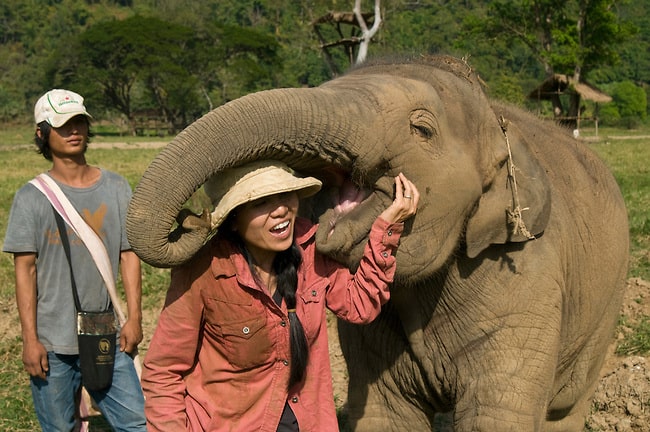
Before I begin, I have a confession to make: My name is Anna, and I have a serious soft spot for animals. Endangered Asian animals have become a particular favorite.
In the last three years, I have traveled across four continents. In every place we visit, I always check out what type of local animal conservation programs I can visit.
Sadly, animal rights in Asia are almost nonexistent. Which is why supporting animal conservation and responsibly managed wildlife sanctuaries there is even more crucial.
In addition to making a difference, volunteering your services while you travel is also a great way to learn more about the local culture of a place.
So without further ado, here are a few of the best wildlife conservation programs helping to save endangered animals in Asia…
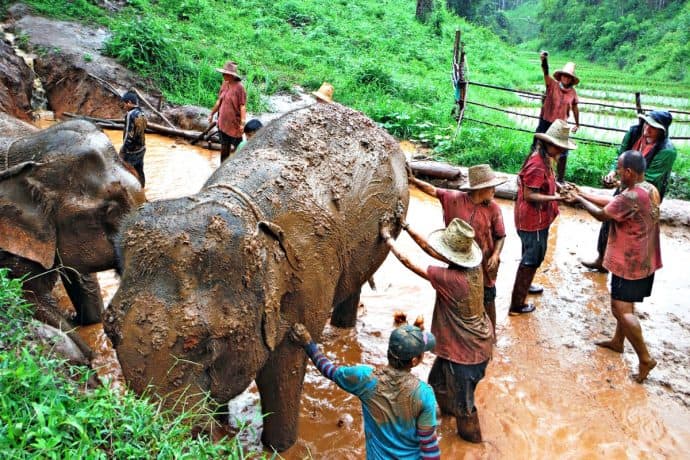
Elephant Nature Park (Chiang Mai, Thailand)
The exploitation of elephants all over Asia is nothing new. For the enjoyment of tourists, they are being subjected to begging in the streets, carrying heavy loads during treks, and forced to perform circus tricks.
The domestication of these beautiful creatures just so that they’re fit to interact with humans is heartbreaking. From taking them away from their mothers while they’re young, to beating and starving them until they are submissive to mahouts, it’s unthinkable once you learn about the abusive practices of the phajaan.
Through the efforts of conscious travelers, a high-profile blogger campaign and social media, people are beginning to understand the detrimental effects of elephant riding. One of my favorite conservation programs in Asia is the Elephant Nature Park in Chiang Mai, Thailand.
Its founder, Lek Chailert, has established a 250-hectare haven, rescuing Asian elephants from the hands of trekking camps, circus acts and street begging.
Volunteering Opportunities: You can visit Elephant Nature Park for a day or, if you’re really serious, volunteer for a week. I did the Karen Experience with them, where we trekked into the jungle to see a group of rescued elephants wandering free in the wild. It was an incredibly uplifting adventure that I will never forget.
READ MORE: 10 Animal Rights Activists (Who Happen to be Women)
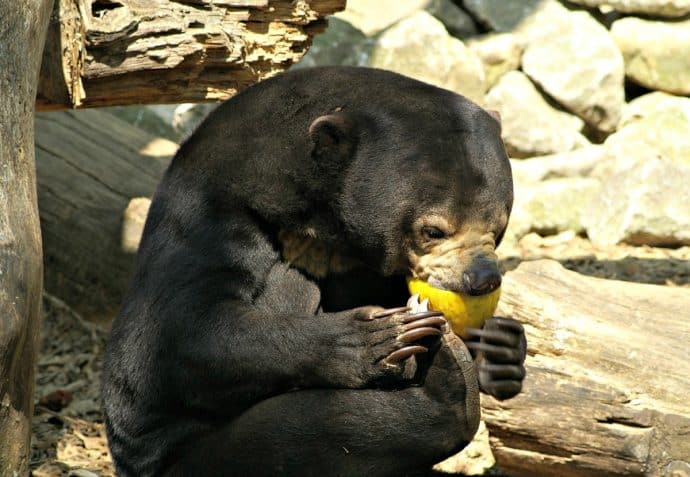
Borneo Sun Bear Conservation Centre (Sabah, Malaysia)
The BSBCC is a bear rescue and rehabilitation facility in Sabah, Borneo. It’s dedicated to protecting Malayan sun bears, which are the smallest (and arguably the cutest) bears in the world.
Sadly, these animals are increasingly threatened by illegal poaching and deforestation. Through the relief efforts of the conservation center, over 41 formerly captive bears are kept in a large forest compound so that visitors can observe them in their “natural habitat” until they are ready to be released to the wild.
If you volunteer here, you get a chance to work closely with biologists and researchers, getting a better grasp on the fundamentals of wildlife conservation. It’s a unique experience that we found educationally enriching.
Volunteering Opportunities: There are a range of activities that you can volunteer for here, from animal husbandry and helping to make their habitat as natural as possible to construction and educating local school children about Sun Bears and conservation. They have volunteer programs for 14-28 days, depending on how long you want to stay.
READ MORE: Borneo Sun Bear Conservation Centre
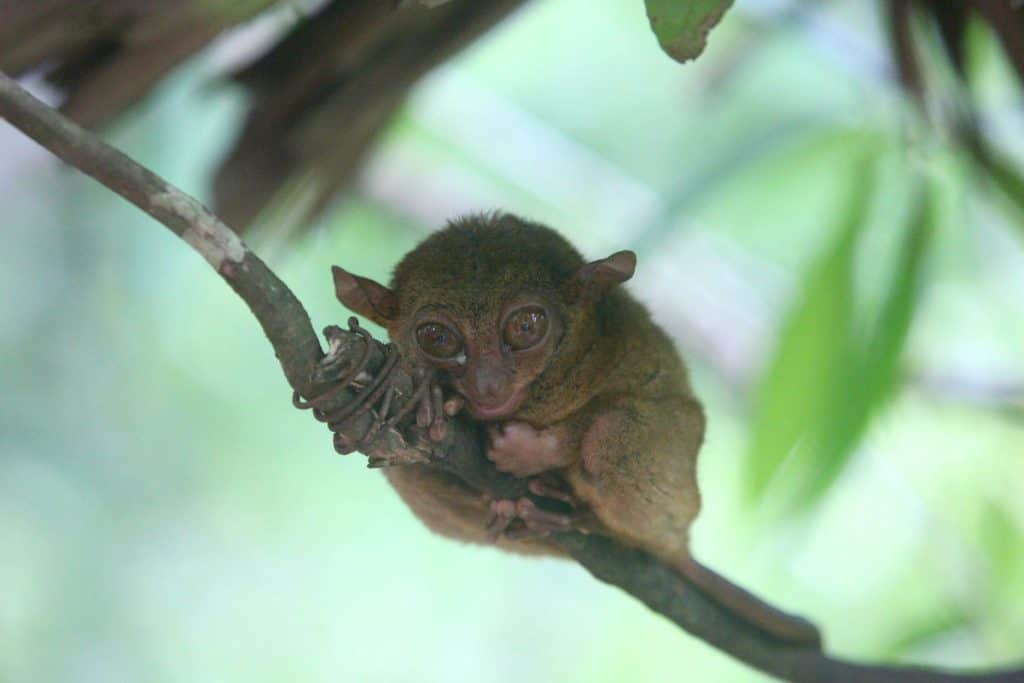
The Tatsikoki Centre (Sulawesi, Indonesia)
Established to help care for the many animals that are confiscated in Indonesia’s illegal wildlife trade operations, this place is a haven for rescued animals.
Strategically located to tackle the border trade between Indonesia and the Philippines, China, Taiwan and Japan, the centre was established in Sulawesi. Orangutans, Sun Bears, Gibbons, Tarsiers, Tortoises, and some of the most endangered mammals that are smuggled around Southeast Asia are cared for and rehabilitated here.
Apart from their conservation work, they also have a rescue team that works with local authorities to provide evidence against wildlife crimes committed by illegal traders and smugglers. I love the fact that the Tatsikoki Centre works carefully with the local community to help educate them about the perils of hunting down animals for illegal trade.
Volunteering Opportunities: While there are opportunities to just visit the Tatsikoki Centre for the day, they are also open to receiving long-term volunteers. A wide variety of roles are available, from educational officers and tree nursery assistants to fundraising and husbandry coordinators.
READ MORE: 60 Weird Animals Around the World
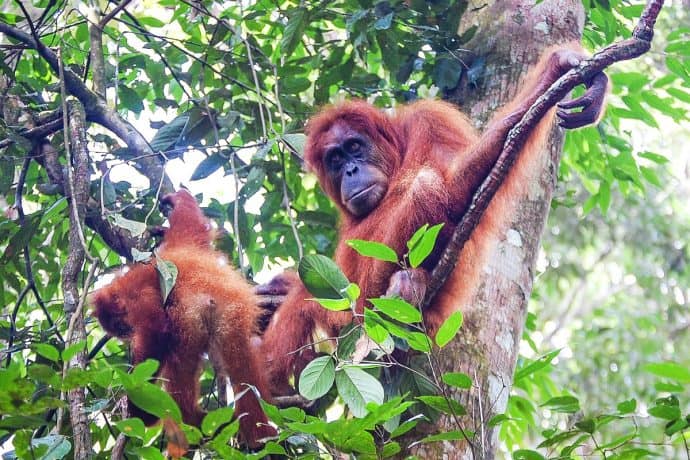
International Animal Rescue’s Orangutan Rescue & Rehabilitation Centre (Ketapang, Indonesia)
International Animal Rescue (IAR) is a notable non-profit that was created for one solitary purpose: to come to the aid of suffering animals around the world. Their Orangutan Sanctuary in Ketapang, Indonesia is a centre that houses, rehabilitates and ultimately releases orphaned and injured Orangutans back into the wild.
One of the reasons I love IAR is because of the hands-off approach that they take towards caring for wildlife. They work to educate the public in the compassionate and humane treatment of all animals. The creative director from our company spent two weeks volunteering here, and vouched for the effectiveness of their programs.
Palm oil plantations have been destroying the homes of many Orangutans, often leaving them stranded with nowhere to go. Baby orangutans are also being captured and taken from their mothers to be illegally sold as pets.
Volunteer Opportunities: You can volunteer your time for 11-22 nights here, helping them farm, working in animal maintenance, and helping enrich the habitats of the Orangutans. They have an award-winning volunteer program that’s well-organized. For those who are keen to help but cannot travel, they also have adopt-an-orangutan programs.
READ MORE: Orangutan Conservation at Sepilok Rehabilitation Centre

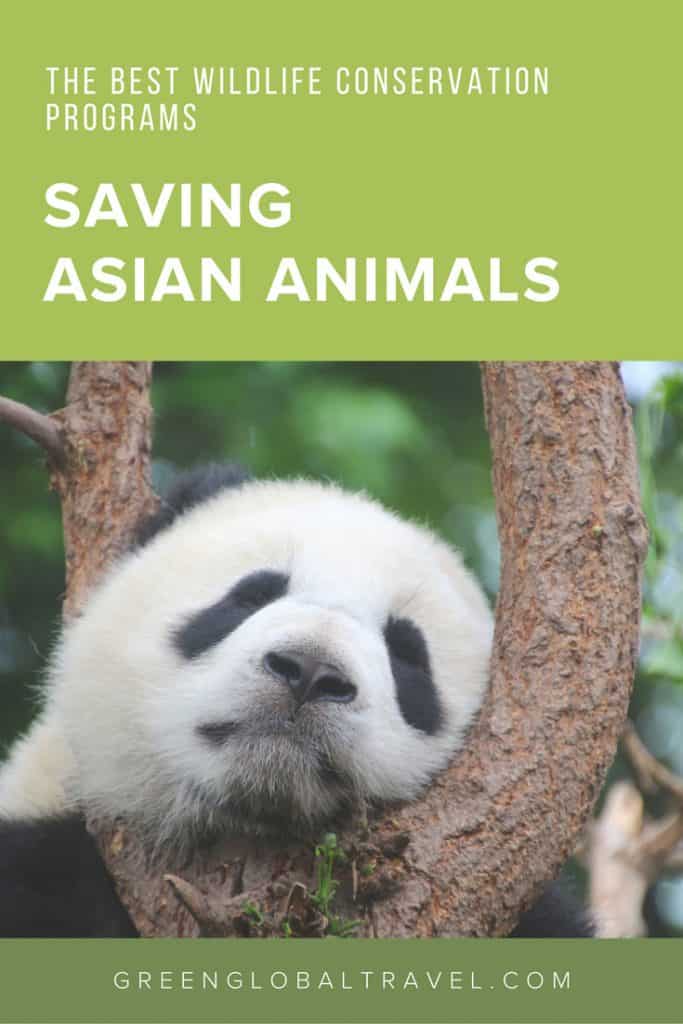
The Dujiangyan Giant Panda Base (Shiqiao, China)
The Dujiangyan Panda Base is a Panda conservation center spanning around 51 hectares (126 acres). It’s located in the province of Shiqiao, which is around 55 kilometers (34 miles) from Chengdu, the capital city of Sichuan province.
Here, you can find Panda rescue and quarantine centers, disease control and research areas, rehabilitation, training and feeding areas. They also have public viewing areas, which they use to educate visitors on Panda conservation.
The Panda rescue and quarantine center focuses on Pandas rescued from the wild who are sick or injured. Here, they can receive medical care and rehabilitation. The Dujiangyan panda base also places a major focus on senior and disabled Pandas. Essentially, it serves as a panda “nursing home,” where they are able to receive special care.
Volunteer Opportunities: You can volunteer your time to be a Panda keeper, where you can help care for these iconic Asian animals. You can also help with the Panda educational programs that they offer.
READ MORE: Top 7 Things to Do in China (for Nature Lovers)
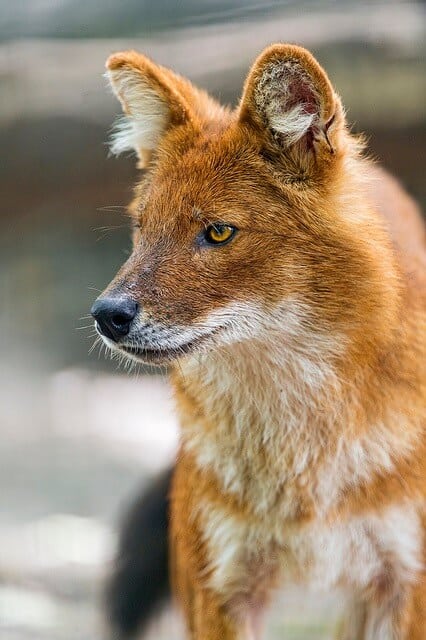
Huai Kha Khaeng Wildlife Sanctuary (Rabam, Thailand)
Like many animals on the Endangered Species list, the biggest threat to the Dhole (a.k.a. Asiatic Wild Dog) is mankind. As human habitat expands into the wilderness of Southern India, Thailand, and other parts of Southeast Asia, they’re spreading domestic dog diseases and killing off the Dhole’s food supply which includes turtles, rodents, and deer).
As a result, the Dhole ranks among the most endangered Asian animals, with an estimated population of around 2000-2500. Because they have a reputation as pests who prey on livestock (which they rarely do), these wild dogs are often trapped, shot, or poisoned.
Fortunately, the environmental NGO EarthWatch Institute is currently studying these misunderstood canids in Huai Kha Khaeng Wildlife Sanctuary, the largest seasonal tropical forest in Thailand (as well as Khao Yai National Park). They’re trying to learn more about the species’ population size, preferred prey, range, and interaction with other large apex predators.
Volunteering Opportunities: EarthWatch offers travelers a chance to volunteer helping scientists conduct research in the field. Assigned tasks include everything from fitting Dholes with tracking collars and analyzing the data the collars collect to surveying the flora and fauna of the parks. Volunteers spend 7-14 days living and working at one of the two aforementioned parks, each of which is home to numerous other wildlife species.
READ MORE: Saving the Dhole, India’s Wild Dog

Snow Leopard Conservancy India Trust (Ladakh, India)
Native to Central and South Asia, the Snow Leopard inhabits mountains (at elevations of 9,800 to 14,800 feet) from Western Afghanistan to Mongolia and western China.
The species is currently on the ICUN Red List due to its dwindling global population, which is around 4,500 to 8,700 individuals and expected to decline by 10% in the next 20 years. Snow Leopards suffer from habitat loss, and are often killed by herders when they encroach on their livestock.
The Snow Leopard Conservancy, which was founded in 2003 by Dr. Rodney Jackson, works to change the relationship between herders and snow leopards. Their primary goal is to ensure the species’ survival and conserve their mountain habitat by expanding environmental awareness and sharing innovative practices.
The India Trust, co-founded in 2003 by Ladakhi mountaineer/conservationist Rinchen Wangchuk, focuses on the Indian Trans-Himalaya region, building local stewardship through community based tourism, education, and research.
Their Ladakh, India conservation program partners directly with local herders, educating and engaging the community in nature/wildlife conservation and helping them sustain their progress long-term.
Volunteer Opportunities: SLC’s India Trust is seeking volunteers with an interest in big cats and even bigger mountains. They’re involved in projects ranging from community homestay development and handicraft development to environmental education, camera trapping, survey of prey species, and more. Volunteers are needed year-round, but especially during the summer months, when the weather in Ladakh is optimal. Please email rigzinslcit@gmail.com for info.
READ MORE: The 10 Best Mountains in the World
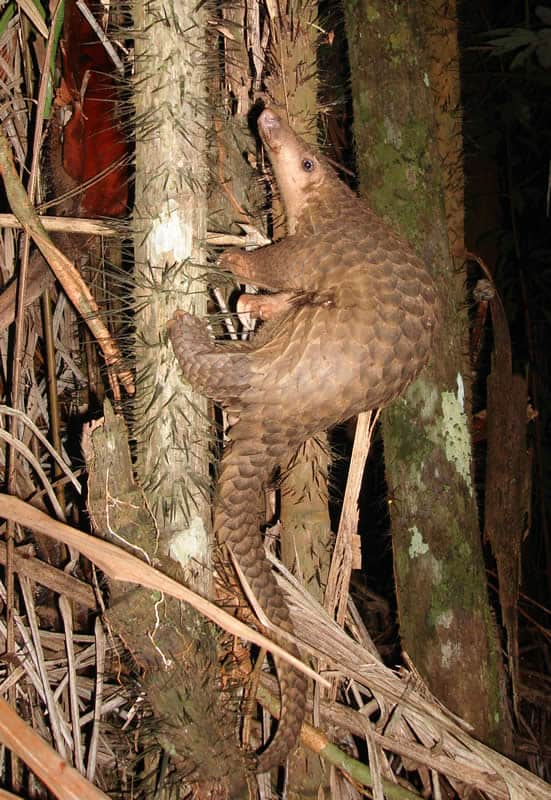
Carnivore & Pangolin Education Centre (Ninh Binh, Vietnam)
Found throughout much of Southern Africa and Southeast Asia, the Pangolin (a.k.a. Scaly Anteater) is one of nature’s most bizarre creatures. They’re nocturnal, live in hollow trees or burrows in the forest, and have extremely long tongues they use to feed on ants and termites.
Their bodies have overlapping scales made of keratin (the same material from which our fingernails and Rhino horns are made). They look walking pine cones, especially when they feel threatened and curl up into a ball. They even emit a terrible-smelling scent from their anal glands, like a skunk.
But none of these defense mechanisms have helped save them from the destruction of their forest habitat, or from being poached for their meat and scales (which are used in traditional medicine). Of the three species of Pangolin currently found in Southeast Asia, one is listed as endangered by the IUCN and two are listed as critically endangered.
Save Vietnam’s Wildlife is working to save the world’s most heavily trafficked animal at their Carnivore & Pangolin Education Centre, which is located in Cuc Phuong National Park (about three hours from Hanoi). The NGO works to rescue poached Pangolins from the illegal wildlife trade and rehabilitate them. They also have a strong Civet rescue and breeding program, as well as strong public education and captive research programs.
Volunteer Opportunities: Volunteers at the centre can work for a week or longer, spending their time feeding Pangolins and maintaining the enclosures. In addition to caring for the animals and enriching their environment, volunteers also help researchers by monitoring their behavior. Healthy Pangolins are released back into the wild, while others receive long-term care and become animal ambassadors.
READ MORE: The 20 Biggest Forests in the World
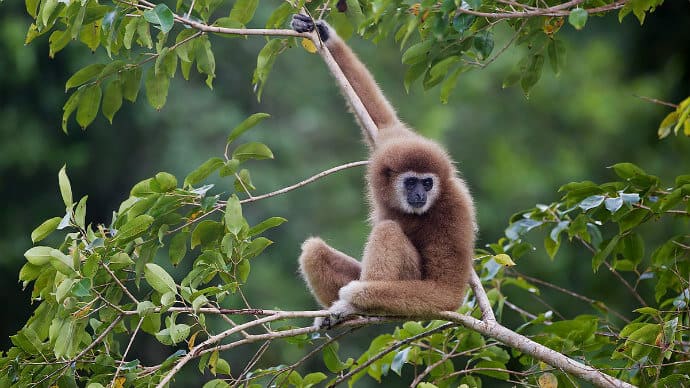
The Gibbon Rehabilitation Project (Phuket, Thailand)
Located near the Bang Pae Waterfall in Khao Phra Thaeo National Park (about 25 minutes north of Phuket’s Old Town), the Gibbon Rehabilitation Project has been rescuing, rehabilitating, and releasing Gibbons since 1992.
The 18 species of Gibbons found in Southeast Asia are considered lesser apes (as opposed to the great apes), because they’re smaller, do not nest, and look more like monkeys. But they are tailless, and form long-term mating pairs. They also boast extremely loud voices and unique ball-and-socket joints in their wrists, which allow them to swing through the trees very quickly.
Unfortunately, most Gibbon species are endangered, primarily due to ever-increasing loss of their tropical rainforest habitat. Many young Gibbons are orphaned by poachers, then captured and put to work posing for tourist photos on the beaches of Koh Samui and Koh Phi Phi.
The Gibbon Rehabilitation Project works to rehabilitate these animals and eventually reintroduce them into the wild. Their facility, which is open to visitors daily, includes the Rehabilitation Site and a Center for Conservation Education. The Wildlife Rest Center Site, where animals who will be released back into the wild are quarantined to minimize human contact, is off limits to tourists.
Volunteer Opportunities: Volunteers are needed for various tasks at the GRP center. At the Rehabilitation Site, volunteers prep food, feed the animals, clean and maintain cages, and perform health checks. At the Reintroduction Site, volunteers also help check on the released animals, collect data, and maintain the trails they use. Email volunteer@gibbonproject.org for more info.
READ MORE: The Top 10 Thailand National Parks
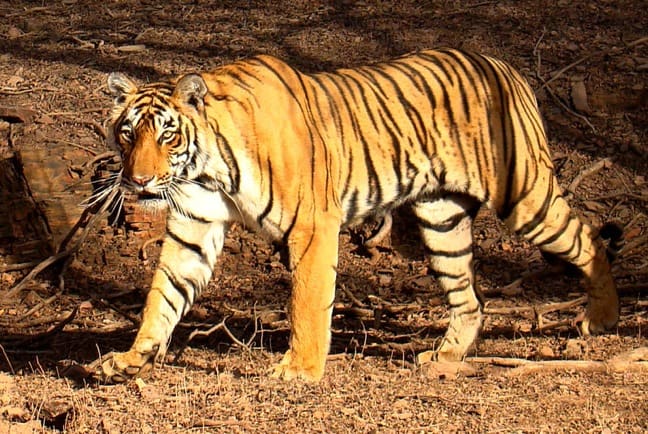
Hyderabad Tiger Conservation Society (Andhra Pradesh & Telangana, India)
The 20th century was an extremely tough time for tigers, which were eliminated from more than 90% of their historic range. Of the 9 subspecies, three went extinct, three (Bengal, Indochina, and Siberian Tigers) were listed as endangered, and three (Malayan, South China, and Sumatran Tigers) were listed as critically endangered.
But by 2016, for the first time in over a century, the population was on the rise thanks to conservation efforts by NGOs such as Panthera and the National Tiger Conservation Authority of India. From an all-time low of around 3,000, the numbers of tigers in the wild in Asia had grown to an estimated 3,890.
The Hyderabad Tiger Conservation Society is a volunteer-driven organization that works on Tiger conservation initiatives in the southern Indian states of Andhra Pradesh and Telangana. The NGO’s environmental assessments played a key role in getting Kawal Wildlife Santuary designated as a tiger reserve in 2012, and they also work in the Nagarjunsagar-Srisailam Tiger Reserve.
Their accomplishments include identifying wildlife corridors, setting up camera traps, monitoring tigers, studying prey density, providing staff with anti-poaching training, creating public education programs, and cooperating with local tribes to conserve dwindling tiger populations.
Volunteer Opportunities: HyTiCoS is always looking to expand its group of “citizen volunteers.” This year they’re working in conjunction with the Telangana Forest Department to survey the area and set up camera traps to observe the tigers and better understand their environment. The survey is part of the National Tiger Conservation and Wildlife Institute of India’s “All India Tiger Estimation,” which is conducted once every four years.
READ MORE: On the Trail of Tigers in Ranthambore National Park
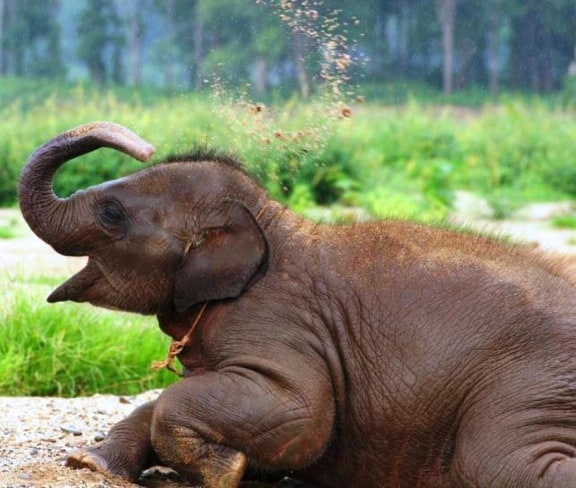
Other Ways You Can Help
While a lot of these opportunities require paying a volunteer fee, the money is used to helping maintain these impressive conservation facilities. Normally, food and lodging are included in many of these travel packages.
Despite the generally horrible issues facing many endangered Asian animals, there are numerous other notable foundations and conservation centers just like the ones mentioned above. All of them are worthy of your support.
No matter what you do– whether it’s donating money, volunteering your time, or just spreading the word by sharing this story on social media– every little bit helps!
Regardless of how big or small your contribution may be, even baby steps can help conservation centers such as these in their noble mission to help these Asian animals. –Anna Faustino; additional reporting by Bret Love & Anika Chaturvedi
Like this post? Pin it for later! 


 Anna Faustino is the Editorial Director of the Adventure in You travel blog. After her year-long stint traveling around the world, Anna found her love for exploring new places insatiable. Driven by epic adventure stories and good food, she is on a mission to go, eat, and write about as many places as she can.
If you enjoyed our story on Asian Animal Conservation, you might also like:
How Fires in Indonesia & Palm Oil Are Killing Orangutans
Lek Chailert, the Elephant Whisperer of Elephant Nature Park
Animal Selfies: The Problem with Putting Ego Over Responsibility