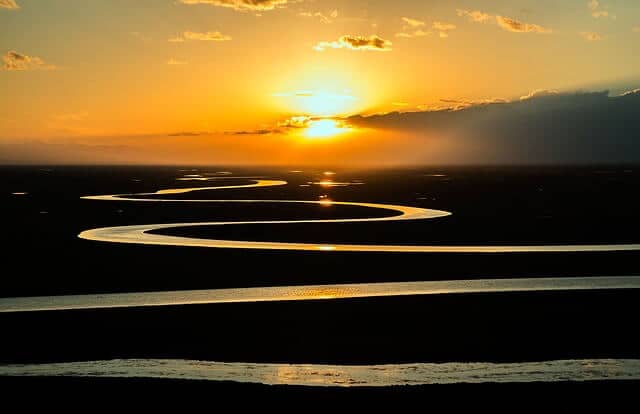
Did you know that less than three percent of all the water in the world is freshwater? Of that, nearly 99% is stored in glaciers, ice caps, and underground. In other words, freshwater on the surface of the earth only makes up a fraction of one percent of the planet’s water.
Whether despite this fact or because of it, travelers are captivated by continental waterways all around the world. Rivers are perhaps the most romantic of them all. They cascade down mountain slopes, creating beautiful waterfalls. They wind through jungles. They carve out the earth’s deepest canyons.
For eons, we humans have relied on rivers for survival. We’ve traveled those earliest of highways, leading us inland. We’ve bathed in them, swam in them, fished in them, and drank from them. We’ve grown our food with their waters. We’ve built many of our greatest settlements on their banks.
Despite only accounting for a small percentage of the world’s water, rivers have been immensely important to humanity. As we move into a climate-changed future, finding a way to keep these valuable resources clean and full will be of the utmost importance.
Without a doubt, we are experiencing a global water crisis. And rivers are inarguably the veins– the very lifeblood– of the planet.
To celebrate their importance and fragility, we here at GGT have compiled an extensive list of the longest rivers in the world. We’ve visited many of them. We’ve learned about them, wading through the history and diving into the now.
We find these amazing rivers inherently fascinating, and we wanted to share them with you…
READ MORE: How to Save Water: 15 Water Conservation Methods
Major Rivers of the World
- Rivers in Asia
- Rivers in North America
- Rivers in Africa
- Rivers in South America
- Rivers in Australia
- Rivers in Europe
- FAQs About Major Rivers
Rivers in Asia
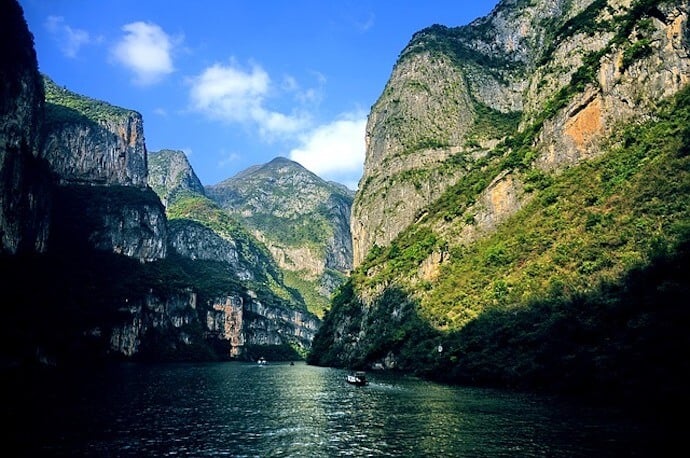
Yangtze River
The Yangtze River is the longest river in Asia and the longest river in China. It is also the third longest river in the world.
It originates at the foot of Mt. Geladandong, the highest peak of the Danggula Mountains, which are located on the Tibetan Plateau. From there, it traverses the country eastward until it empties into the East China Sea at the far coastal estuaries.
Stretching over 3900 miles, the Yangtze River moves through 10 provinces in China and hosts four of the country’s major cities along its banks, including Shanghai. Additionally, the path of the Yangtze includes China’s world famous Three Great Gorges, which is said to hold the most beautiful parts of the river.
The Yangtze has a huge range of biodiversity stemming from the different landscapes it crosses. It moves from extremely high mountains through thick forests and into agricultural wetlands. Its territories are home to several beloved species, such as giant pandas, the Yangtze river dolphin, and snow leopards.
READ MORE: 20 Tallest Mountains in the world (For Your World Travel Bucket List)
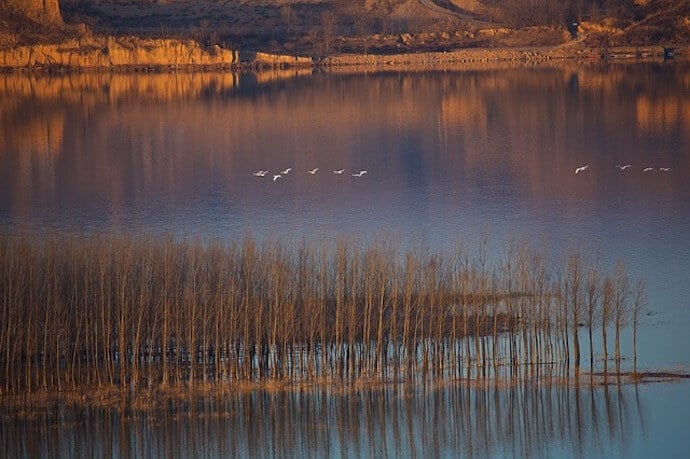
Yellow River
Incredibly, China also has the second longest Asian river: The Yellow River (a.k.a. Huang He). Stretching the tape to nearly 3400 miles, it is the sixth longest river in the world. It is known as the “mother river” by Chinese citizens.
The Yellow River begins in the Quinghai province in Western China, where it is fed by run-off from the Bayan Har mountains. It winds through eight other Chinese provinces before flowing into the Bohai Sea close to Dongying, a city in the northeast Shangdong province, which has been vitally important to China’s historic development.
The Yellow River has long been crucial to the Chinese civilization. It has helped to irrigate fields. In addition to supporting the common people, it has provided inspiration to artists and thinkers, as well as being a spiritual symbol for the country.
Sites dating back to the Neolithic period (7,000-3,700 BCE) have been found along its banks. Even today, the Yellow River and its tributaries pass by some of China’s largest and oldest cities, including Xi’an, Zhengzhou, and Jinan. Additionally, the swollen population of the Huang He Basin is surpassed by only a couple of countries in the world.
The Yellow River carries more sediment per cubic foot of water than any other river in the world. This is because it passes through large, dry areas (such as the Loess Plateau), where it picks up silt. Sadly, the high concentration of sediment, as well as the masses of humans who live near the river, have made it an uninviting environment for wildlife.
READ MORE: Top 7 Things to do in China for Nature Lovers
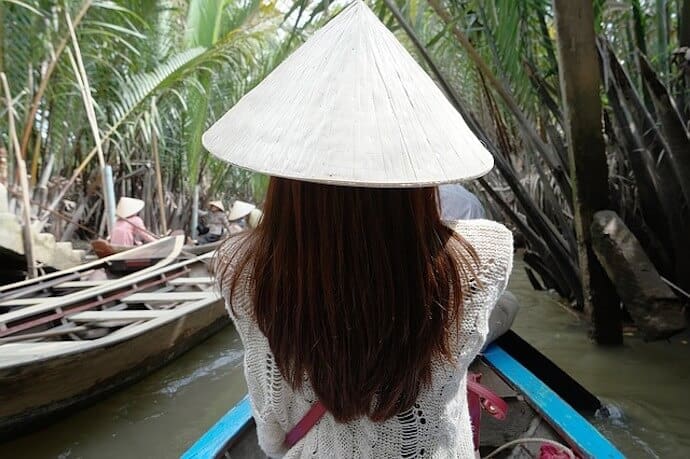
Mekong River
The Mekong River meanders through Southeast Asia for around 2,700 miles. It is the longest river in this region of Asia and ranks 12th among the longest rivers in the world.
The Mekong, like the Yellow River and Yangtze River, starts in China, but then it moves south through several other countries. It forms a border between Myanmar and Laos, then between Laos and Thailand. It also moves through Cambodia to Vietnam before emptying into the South China Sea.
While the Mekong may not be quite as long as other rivers in Asia, it is a major river and plays an integral role as a food source. In addition to irrigating fields and being used for rice cultivation, the Mekong feeds the Tonle Sap in Cambodia, a highly fished lake that swells from about 1,000 square miles to 4,000 during the flood season in August and September.
Throughout Vietnam, there are a number of canals in which small ships can travel upstream as far as Phnom Penh, Cambodia’s capital. Beyond there, ships can continue northward during the high water season until transportation is thwarted by the Khone Falls, where the Mekong River passes from Laos into Cambodia.
The Mekong River Committee was founded in the 1950s, and was instrumental in compiling information about the river. Now the Mekong River Commission for Sustainable Development has taken a major role in protecting it and encouraging cooperation between its countries.
READ MORE: What Is Ecotourism? (The History & Principles of Responsible Travel)
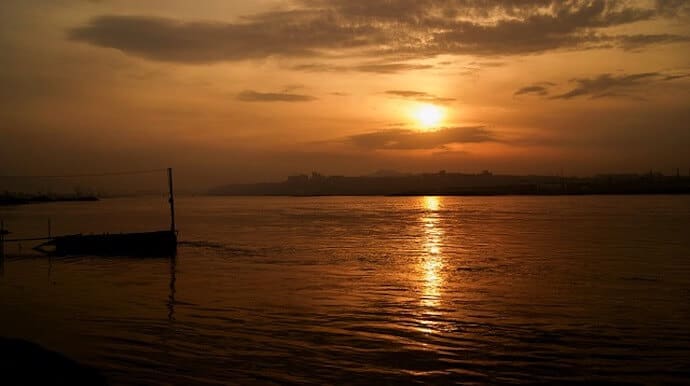
The Three Great Siberian Rivers
There are three very large, very long rivers– the Yenisei, Lena, and Ob– that run northward in Siberia, eventually emptying into the Arctic Ocean.
The longest of the great Siberian rivers is the Lena River, which is a little over 2,700 miles, stretching out from the Baikal Mountains to the Arctic Laptev Sea. It has a massive drainage basin (nearly 2.5 million square miles) and the largest river delta feeding the Arctic. It also has amazing nature reserves along its route, including the Lena Delta Nature Reserve, the Lena Pillars, and the Ust-Lensky Nature Reserve.
Stretching over 2,250 miles, the Ob River is not the longest individual river in this triumvirate. But in terms of economics, it may be the most important. The bulk of Russia’s oil and natural gas reserves are located along its banks. It’s also used for agriculture and fishery.
There are currently three large hydroelectric power plants in the process of being built within the river system that includes the Ob and the Irtysh Rivers (over 2600 miles), which collectively comprise the second longest river system in the country.
The Yenisei River is the largest (but shortest) of the three, exceeding 2,100 miles. However, it is part of the Yenisei-Angara-Selenga river system, which is the longest river in Russia. Its source is in the Mongolian highlands. Within it is Lake Baikal, the world’s largest freshwater lake by volume of water. It contains over 20% of the world’s fresh water– more than all five of the U.S. Great Lakes combined.
READ MORE: 10 Best Lakes in the World (For Your World Travel Bucket List)
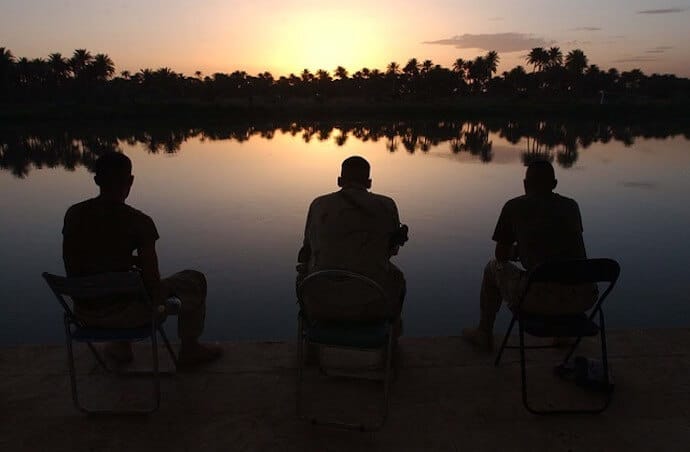
Euphrates River
At over 1,700 miles long, the Euphrates River is the longest river in the Middle East. It is also of immense historical importance, being one of the two rivers (along with the Tigris) that created Mesopotamia, the “land between two rivers.”
The Euphrates gets rolling in eastern Turkey before it passes into Syria, then Iraq. Its basin area also includes parts of Saudi Arabia, Kuwait, and Iran. After the river joins forces with the Tigris, forming the Shatt al-Arab, they collectively empty into the Persian Gulf.
The Euphrates features multiple times in the Judeo-Christian Bible and in the hadiths of Muhammad. It was one of the four rivers that flowed through the Garden of Eden. Prior to this, it was home to several deities, including Ishtar (the goddess of fertility) and Anu (the sky god). Mesopotamians worshipped these gods and goddesses in structures called Ziggurats.
The Euphrates and the Tigris created especially fertile and productive wetlands. Unfortunately, as predicted by the prophet Muhammed, conflict and human interference has done significant damage to both rivers, and they are rapidly drying up.
READ MORE: Why I’d Prefer To Forget Visiting The Dead Sea, Jordan
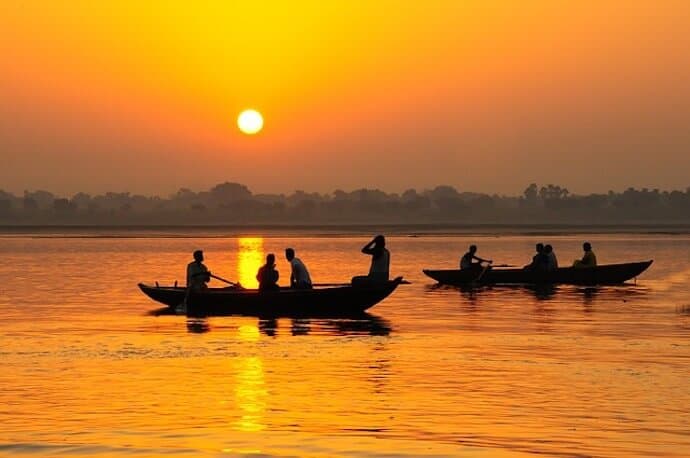
Ganges River
The Ganges, though not the longest river that flows through India, is the longest if we consider the distance covered within the country. In terms of sheer length, the Indus is actually the longest, with the Brahmaputra second, and then the Ganges at 1569 miles. Nevertheless, the Ganges is actually the third largest river in the world in terms of discharge.
When it comes to rivers in India, they don’t get bigger or more important than the Ganges, which is highly sacred to Hindus and worshipped as the goddess Ganga . Equally as impressive, it has over a dozen capitals located along its shores.
Unfortunately, all of that esteem has not stopped the Ganges from becoming disturbingly polluted and a threat to both humans (who bathe in it for ritual) and the animals trying to live in it.
The Ganges’s source is in the Himalayan mountains, where the Bhagirathi and Alaknanda Rivers converge. From there, it flows east through northern India and into Bangladesh before reaching the Bay of Bengal.
The area around the Ganges has been inhabited for around 4000 years now, and its basin is currently home to over 400 million people. They rely on the river for drinking water, food, irrigation, and manufacturing. It is easily the most populated river basin in the world.
READ MORE: 10 Most Threatened Rivers (For Your World Travel Bucket List)
Rivers in North America
Missouri River
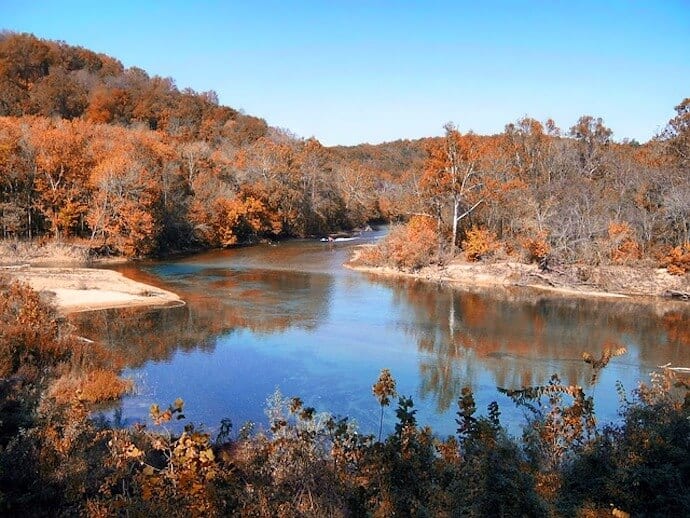
Though it receives much less press than the second longest river in the U.S., the Missouri River is reported at over 2350 miles, and is both the longest river in the US and the longest river in North America. About half a million square miles drains into it. Nevertheless, it is considered but a tributary of the Mississippi River.
The Missouri, or “Mighty Mo,” starts in the Rocky Mountains of Montana and meanders eastward until emptying into the Mississippi just north of St. Louis. Consequently, it played a vital role in the expansion of the American West.
The Missouri was, in fact, the river famous explorers Lewis and Clark used to start off their historic expedition. Their westward exploration was inspired by the Louisiana Purchase, which included the breadth of land from the Missouri’s headwaters to the Mississippi.
Following that, throughout the late 1800s and early 1900s, the river became much less free-flowing. A series of dams, dykes, and levees were introduced in order to control its flow and prevent floods.
Nowadays, there is a 100-mile national park along the Nebraska-South Dakota border that remains as one of the only unspoiled stretches of the river. The Missouri and Mississippi River combine to make the fourth longest river system on earth.
READ MORE: List of National Parks By State (An Epic Guide to “America’s Best Idea”)
Mississippi River
Only about 100 miles shorter than the Missouri River, the Mississippi River is also over 2300 miles long. It drains at least part of 31 different states and two different Canadian provinces, despite being located entirely in the United States.
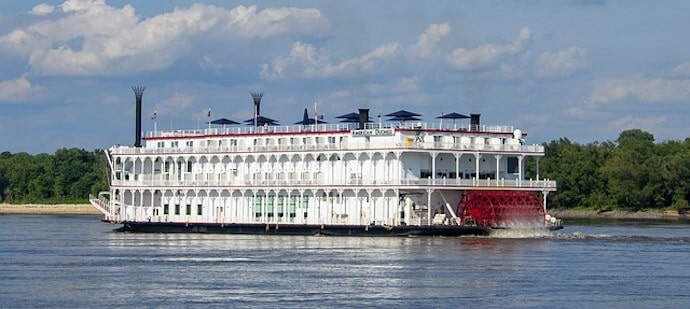
While it may be only the second longest river in North America, the mighty Mississippi’s rate of discharge is the continent’s largest. Plus, it has been the central shipping river in the United States for centuries. In fact, it’s one of the most active commercial river passages in the world, including lots of agricultural exports and petroleum products.
The Mississippi is typically divided into four sections. The headwaters of the Mississippi is a humble stream whittling its way down to St. Paul, Minnesota. From there, the upper river extends to St. Louis, where the Missouri River empties into it.
The middle Mississippi moves south 200 miles until the Ohio River dumps into it at Cairo, Illinois. The river doubles in size there. Finally, the much wider and slower-moving lower Mississippi turns muddy from all of the turbulence of converging tributaries and eases its way to the Gulf of Mexico.
Iconic humorist Mark Twain made the lower Mississippi into one of the most famous rivers in literature. The river was a place wrought with fur traders, paddle boats, and warships. If ever there were a place for adventure, this is it!
READ MORE: 10 Travel Books That Inspired My Love of Adventure
Yukon River
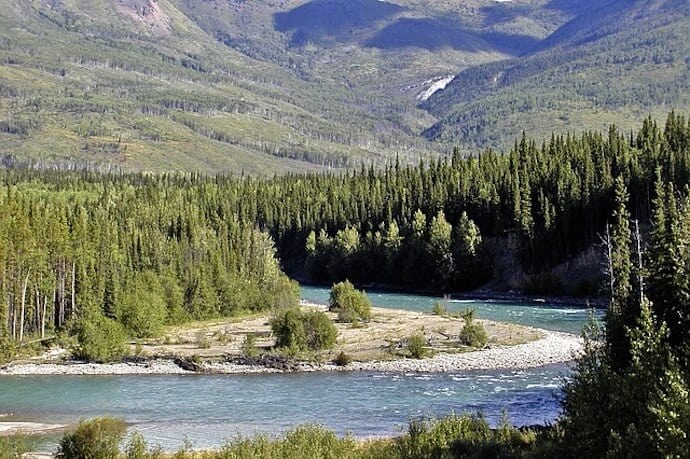
The Yukon River, which is North America’s third longest, flows west from British Columbia through Alaska and into the Bering Sea. It stretches nearly 2000 miles long, and its watershed encompasses nearly 300,000 square miles.
The Yukon River is steeped in history. It is believed to be the primary route for North America’s first human residents from Siberia.
It was also the chief route used by those who participated in the Klondike Gold Rush. In fact, the river was still packed full of boats until the Klondike Highway was built in the 1950s.
Aside from being important to people, the Yukon River is a key spot for spawning Chinook salmon. The river actually has the longest wooden fish ladder in the world, at around 1200 feet. It was built next to a dam in Whitehorse so that the salmon could continue to pass.
READ MORE: The 10 Best Canoe Trips (For Your World Travel Bucket List)
Rio Grande/Rio Bravo del Norte
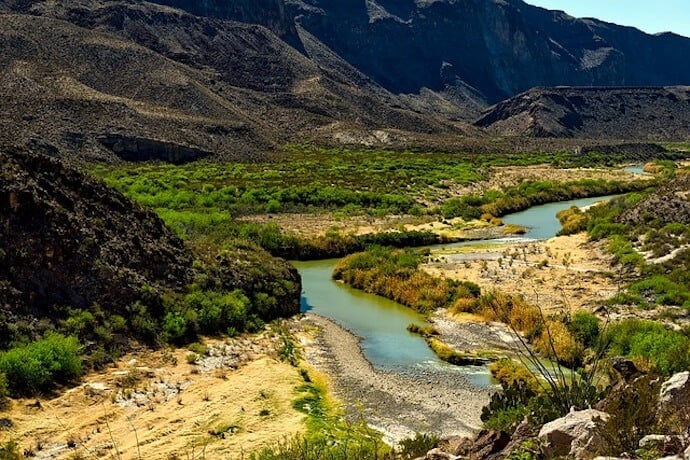
Despite originating in the United States, all the way up in the Colorado Rockies, the Río Grande is actually the longest river in Mexico. South of the border, it’s known as El Río Bravo del Norte.
In total, the river stretches nearly 1900 miles. Within that span, it creates the border between Mexico and Texas. However, the “official” length of the border it creates fluctuates between just under 900 to just under 1250 miles, depending on how it’s measured.
The amazing thing about the Río Grande today is that only about one-fifth of its water flow actually reaches the Gulf of Mexico. The rest of the water is collected for municipal and irrigative uses.
Despite its two grandiose monikers, the river is only 60 feet at its deepest, and it is barely navigable by even small boats.
Even though the water flow and watershed has dwindled significantly, the river itself is still absolutely beautiful. In the US it is protected as a wild and scenic river, and includes the Río Grande del Norte National Monument near Taos, New Mexico.
READ MORE: Exploring Rio Secreto, the Riviera Maya’s Amazing Underground River
Rivers in Africa
Nile River
Until recently, the Nile River was unanimously regarded as the longest river in the world. And, with the nile river length at 4,132 miles long, it’s no wonder. The Nile (whose source is Lake Victoria, the largest lake on the continent) crosses ten different African countries on its route north to the Mediterranean Sea.
“The Nile” is actually composed of the White Nile and the Blue Nile, which starts at Lake Tana in Ethiopia and joins the White Nile in Sudan. It’s their combined distance that has often been denoted as the world’s longest river.
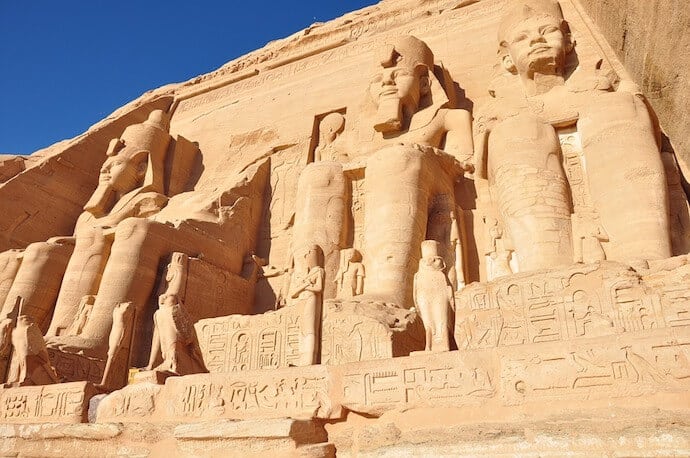
In addition to being the longest river on earth, the Nile was integral to ancient Egyptian life and remains just as important today. The Nile used to flood the lands of Egypt and leave fertile, black soil in its wake.
The Pyramids of Giza and the Sphinx are located just 20 miles from its delta, and the Nile was also the main highway for transporting stones from Aswan to the northern pyramids. It remains an essential element of modern-day business and transport.
Additionally, the Nile has amazing wildlife. There are huge mammals, like rhinos and hippos. It’s home to some 30 different types of snakes, over half of which are poisonous. Then, of course, there is the giant Nile Crocodile, which commonly reach lengths of 13 feet and weigh in at around 1500 pounds.
READ MORE: 10 Ancient Archaeological Sites (For Your World Travel Bucket List)
Congo River
Though it falls just short of the 3000-mile mark (longer than any river in North America or Europe), the Congo River has been largely overshadowed by longest river in Africa, the Nile. But the Congo River is the ninth longest river in the world and is also the deepest river in the world at 720 ft. The Congo River was made famous by Joseph Conrad’s novel, Heart of Darkness.
Dating back 1.5 to 2 million years ago, the Congo starts in the highlands of Zambia and descends from there to the Atlantic Ocean. En route, it encompasses 4,000-plus islands, two equator crossings, and possibly the second largest rainforest on earth.
Livingstone Falls, a 200-mile stretch of rapids and waterfalls, is known to be one of the more impressive sites along the river. The Congo River actually has the second highest flow rate of any river on the planet. So, in terms of flow, Livingstone Falls could be considered the largest waterfall in the world.
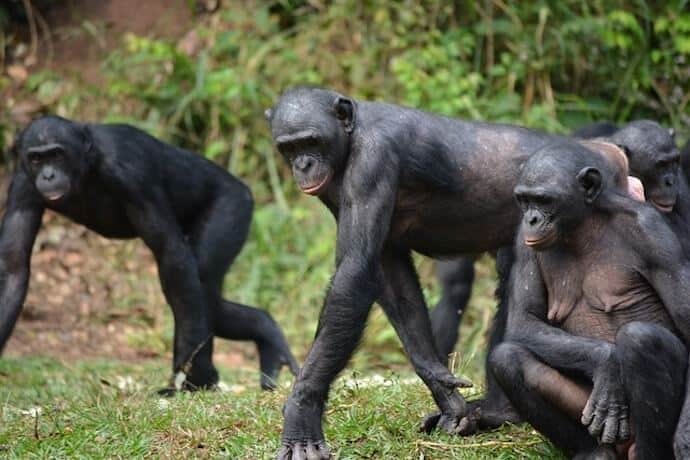
The Congo River basin is arguably among the best rivers in Africa and in the world for watching wildlife. It’s home to more fishes, mammals, reptiles, and birds than any other area of the African continent. Bonobos and elephants roam along its banks, and manatees, crocodiles, and hippos swim in its shallows.
READ MORE: 60 Weird Animals Around The World
Niger River
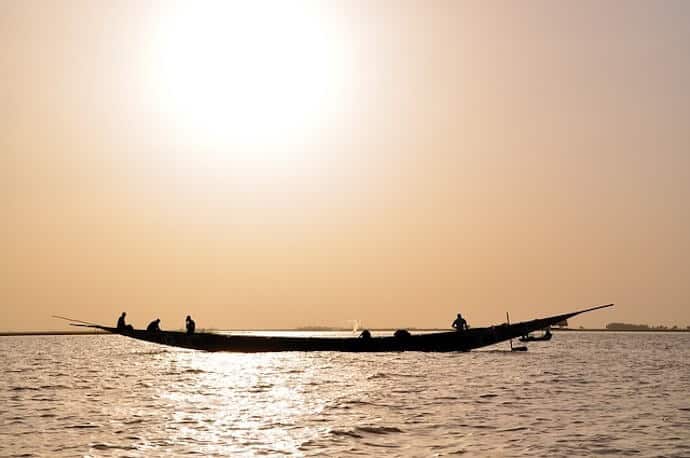
Yet another river that exceeds 2500 miles, the Niger River is Africa’s third longest waterway, and it has played a prominent role in trade for centuries. It was used in ancient times to transport gold from Ghana to Arab traders.
Aside from length, the Niger River is particularly remarkable because of its shape, which is somewhat boomerang-like. It begins about 150 miles from the Atlantic coastline, swings inland and northward, then twists to a southwesterly route around Timbuktu.
It is actually two ancient rivers, now properly identified as the upper and lower Niger. As the Sahara Desert dried, the rivers changed course to merge into one. Its most northerly section, the “Niger bend,” is the closest source of water to the Sahara.
Besides being a trade route for gold, the Niger Delta was a favorite of European explorers, specifically the Portuguese. It supplied almost 50% of the slaves in the transatlantic slave trade, garnering it the name of “Slave Coast.”
Its delta, known as the “Oil Rivers,” played an enormous role in Nigeria becoming Africa’s largest producer of petroleum.
READ MORE: 25 Biggest Deserts in the World (For Your World Travel Bucket List)
Rivers in South America
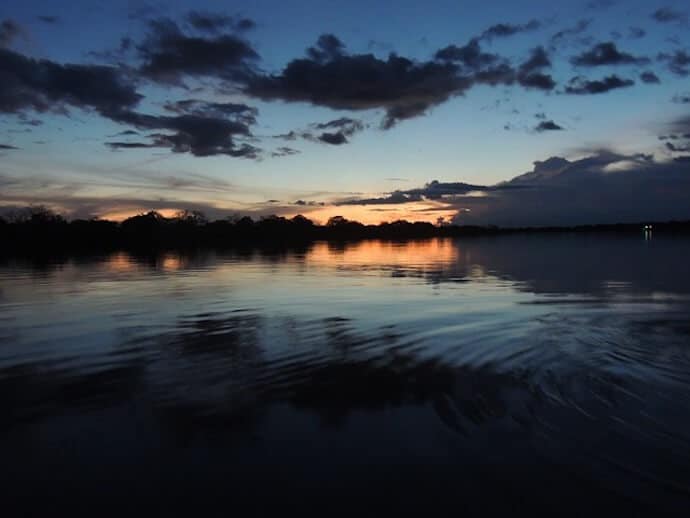
Amazon River
The official new (and widely disputed) title-holder for the world’s longest river is the Amazon River, which held the title of second longest throughout the 20th century.
The change occurred because certain scholars claimed that the Amazon originates further into Peru than once believed, making the 4,000-plus mile river possibly the longest.
What’s not up for debate is the fact that the Amazon River is the largest river in the world by volume of water discharge. During the rainy season, the Amazon can swell up to nearly 25 miles across in some areas making it the widest river in the world.
The river drains about two-fifths of the entire continent of South America. And, being located in the equatorial tropics, the Amazon River basin gets 400-plus inches of rain a year.
Wildlife in the Amazon is as incredibly diverse as you’d expect, with hundreds of new species being discovered every year. Bull sharks have been spotted in the river over 2,000 miles inland.
It’s also home to giant catfish weighing over 200 pounds and arapaima, which is amongst the largest freshwater fish at over 400 pounds. There are also copious caiman, tamarin, jaguars, capybara, and much more.
Of course, the Amazon is also renowned for its rainforest. Its 1.4 billion acres of forest is home to one out of every ten known species on the planet. It accounts for half of the world’s remaining tropical forests.
READ MORE: Our Adventures in the Peruvian Amazon
Paraná River
Not many people outside of South America can name the continent’s second longest river, the Paraná River. Its source is the union of the Grande River and the Paranaiba River in southeastern Brazil. From there, the Paraná moves just over 3000 miles southwest into the La Plata River.
Joined by several other rivers along the way, the Paraná River creates some of South America’s most remarkable places.
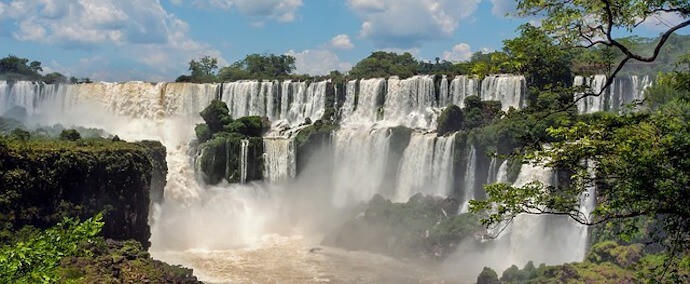
Along with the Paraguay River, it helps to form the Pantanal, the world’s largest wetland. Together they also create the world’s second largest waterfall, Iguazu Falls. La Plata River, into which the Parana drains, accounts for one-fifth of the continent’s entire watershed.
Along with the Paranaíba, the Paraná helps to create the largest section of semi-deciduous forest in the Brazilian Atlantic ecoregion. These interior forests are habitat for some of the rarest animals in South America, including those with fun names such as the golden-rumped lion tamarin.
READ MORE: The 10 Best Waterfalls (For Your World Travel Bucket List)
Amazon River Tributaries
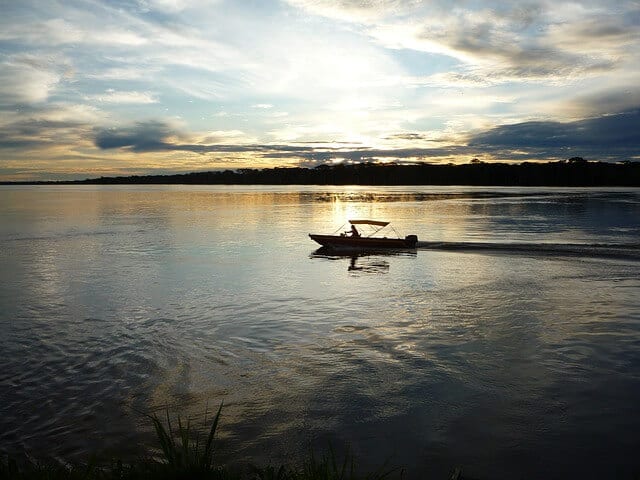
While the Amazon is nearly twice the length of its two longest tributaries, they are the third and fourth longest rivers in South America. The Madeira River is just over 2000 miles long, and the Purus River is just under 1900 miles long.
The Madeira River is the largest of the Amazon’s many tributaries, and it is packed with wildlife. The Madeira Basin is home to giant otters, pink dolphins, spotted jaguars, and several other endangered animals. The river itself is home to more than 750 different species of fish.
The Purus River, besides being long, also holds the title as one of the curviest rivers on earth. A straight line from the origin to the delta is less than half as long as the river.
Another unique feature of this river is the five parallel channels that run alongside it. Additionally, its basin has historically been home to many Amazon tribes, and it is now also home to many rubber plantations.
Interestingly, all ten of South America’s longest rivers are at least partly located in Brazil.
READ MORE: Ecotourism in the Ecuadorian Amazon
Araguaia & Tocantins Rivers
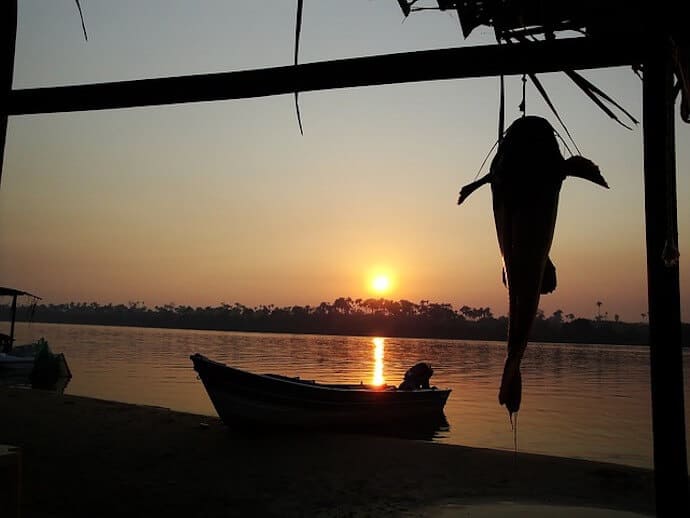
The Araguaia River (which spans roughly 1600 miles) is technically a tributary of the Tocantins River (also roughly 1600 miles), and they have approximately the same rate of flow when they join forces. Nevertheless, the Tocantins is the river credited with emptying into the Atlantic.
Coincidentally, both rivers’ namesakes are related to birds. Araguaia means “river of red macaws,” and Tocantins means “toucan’s beak.” So, it would seem to go without saying that these would be good waterways for spotting tropical birds, particularly parakeets, parrots, and macaws.
The Tocantins Rivers runs roughly parallel to the Xingu, a major tributary of the Amazon, and it opens into the ocean just south of the Amazonian delta. The Araguaia runs between the Xingu and Tocantins, joining the Tocantins River about two-thirds of the way between its source and the delta.
Unfortunately, much of the land around these rivers have been deforested for lumber and the creation of pasture land for grazing cattle.
READ MORE: 10 Eco Lessons in Quotes from the Lorax
Rivers in Australia
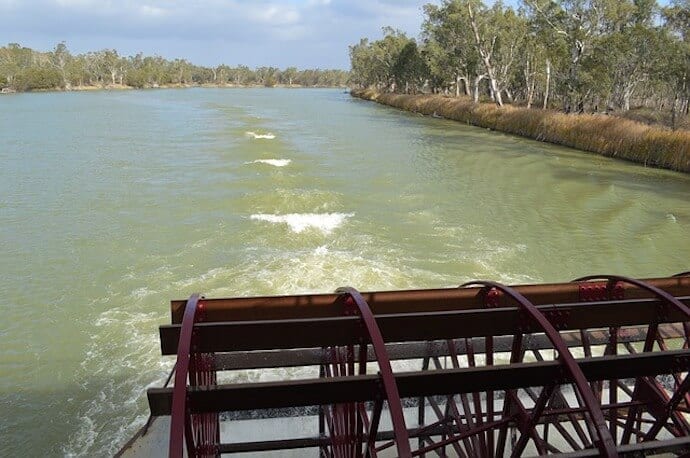
Murray River
The longest river in Australia is the Murray River, which measures over 1500 miles. Together with the Darling River, which is Australia’s third longest at a little over 900 miles, the Murray-Darling is the longest river system on the continent.
Adding to the statistical ties, the Murrumbidgee River is just a bit under 1500 miles and is Australia’s second longest river. It is also a tributary of the Murray-Darling River system.
Although the Murray Rier has a catchment of over 400,000 square miles, it only averages a discharge of 31 cubic feet a second and has had areas that dried up on several occasions.
Due to agricultural runoff, drought, and overuse, the Darling River barely flows at times, and has an incredibly high salt content and pollution levels.
These river systems need some serious TLC, but thankfully NGOs such as World Wildlife Fund are currently trying to save them before they’re gone for good.
READ MORE: Top 10 Australian National Parks (World Travel Bucket List)
Rivers in Europe
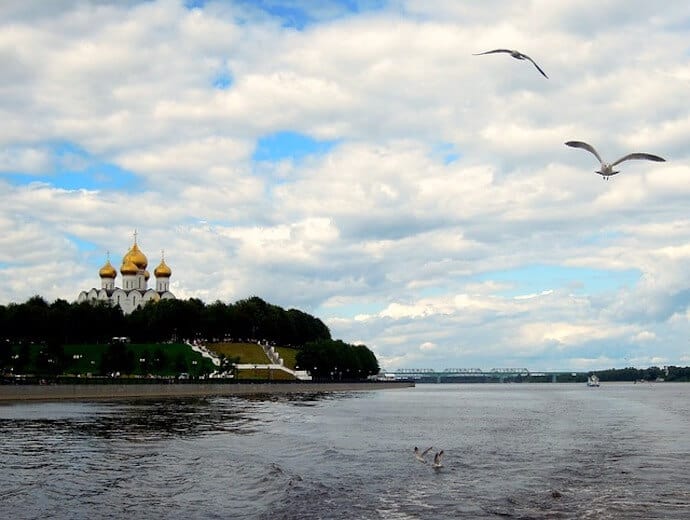
Volga River
In terms of long rivers, Europe isn’t anywhere near the top among the six main continents. And most folks probably wouldn’t guess that Russia is the location of Europe’s longest river. But, at nearly 2300 miles, the Volga River takes the crown for the longest river in Europe.
The Volga starts about 200 miles outside of St. Petersburg and flows to the Caspian Sea. Its drainage basin includes nearly 40% of the country’s population and over half of Russia’s largest cities, including Moscow.
Considered Russia’s national river, the Volga has over 200 tributaries and is almost entirely navigable, though it is frozen for a significant portion of the year.
The river is used extensively for industrial purposes, transporting building materials, oil, produce, and automobiles. There are numerous ports along its banks, as well as huge dams and hydroelectric power stations.
Near its delta, the Volga River creates a rich habitat for over 1000 species of animals and more than 400 species of plants. It is also home to sturgeon, which are the source of Russia’s famous caviar.
READ MORE: Visiting Chernobyl Today: 30 Years After Nuclear Catastrophe
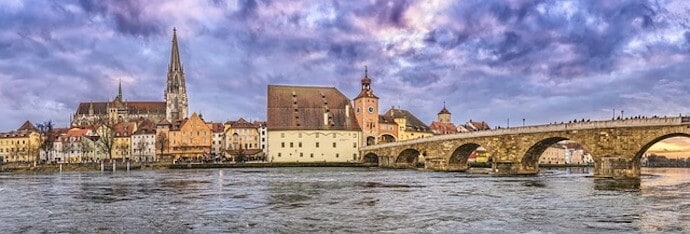
Danube River
Starting in Germany and traversing a total of 10 European countries, the Danube is the quintessential river of Europe. It boasts incredible old-world architecture along its banks and impressive bridges between them. After nearly 1800 miles, it finally empties into the Black Sea.
In addition to traveling through 10 countries, the Danube River has four major capital cities along its banks– Vienna (Austria), Bratislava (Slovakia), Budapest (Hungary), and Belgrade (Serbia). Consequently, the Danube supplies drinking water for around 10 million people.
Although Europe’s second longest waterway doesn’t really register on the world stage in terms of length, it does have the second largest delta in the world (after the Ganges). It creates Europe’s largest wetland, providing a habitat for over 5,000 species of plants and animals.
Historically, Greek sailors once navigated the Danube, and the river functioned as the northern border for the Roman Empire.
Small ship cruises along the Danube River date back to the 1800s. The river has also inspired many artists, including renowned Austrian composer Johann Strauss II, who wrote “The Blue Danube” in its honor. –Jonathan Engels
FAQs About Major Rivers
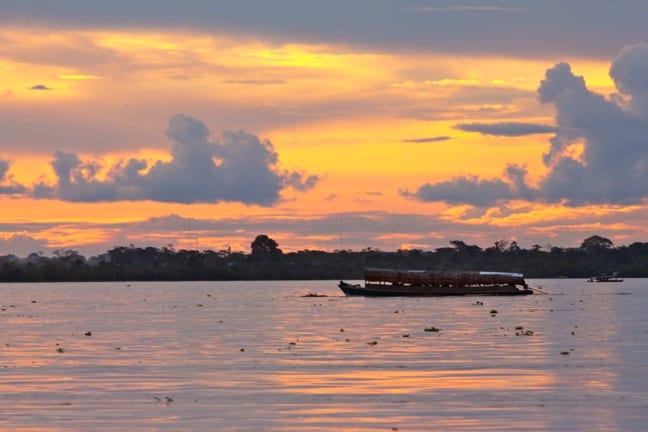
What is the Longest River in the world?
At 4,132 miles long, the Nile River used to be unanimously regarded as the longest river in the world. It is the combined distance of the White Nile and the Blue Nile that has often been denoted as the world’s longest river.
The exact length of the Nile River and the Amazon River changes over time and depends on who measures them.
Which is the Longest African River?
The Nile River is the longest African River.
What is the Deepest River in the world?
The Congo River is the deepest river in the world at 720 feet deep.
How Long is the Amazon River?
The Amazon is 3,976 miles long. However, the exact length of the Amazon River has changed over time and depends on who is measuresing it.
What is the Widest River in the world?
The Amazon River is the widest river in the world. In the dry season, the Amazon River can be 6.8 mi wide, but in the wet season that width can more than triple.
How Many Rivers in the world are there?
This is a difficult question to answer due to the definition of river vs. stream.
A river is defined as “a large natural stream of water flowing in a channel to the sea, a lake, or another such stream”. A stream is defined as “a small, narrow river”.
To put a number on it, there are 165 to 170 major rivers on earth. No one knows the exact number of streams as there are still more to be discovered in the Amazon Basin.
What is the Longest River in South America?
The longest river in South America is the Amazon River.
What is the Longest River in Brazil?
The longest river in South America is the Amazon River. The other major rivers in Brazil are The Tocantins, The Rio de la Plata and the Sao Francisco.
What is France’s Longest River?
The answer depends on whether the question is what is the longest river that runs through part of France or whether the question is what is the longest French river that is within the French borders.
At 764 miles, the Rhine River is the longest river that runs through France as well as 5 other countries.
At 629 miles, the Loire River is the longest river in France that is completely contained within the countries’ borders.
What is the Longest River in the UK?
At a length of 220 miles, the River Severn is the longest river in the UK.
What is the Longest River in England?
The River Severn is the longest river in England.
What is Italy’s Longest River?
The Po is Italy’s longest river at 405 miles. The Po River runs from Monte Viso to the Adriatic Sea.
What is the Longest River in Canada?
The MacKenzie River is the longest river in Canada at 1080 miles in length and flows from Great Slave Lake into the Arctic Ocean.
What is the Longest River in the United States?
At over 2350 miles, the Missouri River is both the longest river in the United States and is North America’s longest river.
What are the two Longest Rivers in the United States?
The two longest rivers in the United States are the Missouri River and the Mississippi River.
The Missouri River is 2,341 miles long and runs through 7 states: Montana, North Dakota, South Dakota, Nebraska, Iowa, Kansas, and Missouri.
The Mississippi River is 2,202 miles long and runs through 10 states: Minnesota, Wisconsin, Iowa, Illinois, Missouri, Kentucky, Tennessee, Arkansas, Mississippi, and Louisiana.
What is Japan Longest River?
Japan’s longest river is the Shinano River. At 228 miles long, it is both the the longest river in Japan and the widest.
What is Antarctica’s Longest River?
At 20 miles long, Antarctica’s longest river is the Onyx River. In the summer months, the Onyx river flows through the Wright Valley from Wright Lower Glacier and Lake Brownworth to Lake Vanda.